Books that BURN and Books that LAST
Public Libraries and Changing Reading Habits
Let me begin with a story about books. Many of you might have read Ray Bradbury’s novel, Fahrenheit 451 or at least watched Francois Truffaut’s 1966 film of the same name based on the novel. For those who have not, the story in brief goes like this: The protagonist, Guy Montag , a fireman, lives in a society in which books have been proscribed by law. His main job, ironically, is not to extinguish fire, but to find and burn books wherever they are. Montag, like his colleagues, wears the number 451 on his uniform as that is the temperature at which books burn. His community is characterized by a total indifference to politics and to the larger issues of the world. It is an epicurean society whose main entertainment is watching television. His own wife, Mildred is an obsessive TV watcher and radio listener. Three of the four walls in their parlour are taken up by television screens. Clarisse, a girl Montag meets, changes his whole perspective on life: he begins to realize there are greater things and nobler pleasures and pursuits in life. He begins to take an interest in reading books. Captain Beatty, the Fire force Chief, comes to find that Montag has traded sides; as a punishment he forces Montag to burn his own home where he had secretly collected books. But Montag kills the Chief and flees the city. A manhunt ensues on live television; but Montag eludes the authorities. When they fail to find him, to save their face before the audience and to appease their appetite for the joy of revenge, they kill an innocent man instead.
During his flight Montag comes across a group of wandering, educated people who learn by heart and remember the great novels of the world, each of them known by the name of the book they remember. They hope that one day the world will come back to the joys of literature and then will need the books they remember. They also teach them to children. When they walk farther away from the city, a bomb destroys the city that was once Montag’s home. The men now turn back to the shattered city so that they may rebuild a society that has destroyed itself through its indifference to books.
While reading the novel some time back, I thought, may be today men would not have to take all the trouble; the books would have survived in other forms, in an internet library, as downloadable e-books, as bits quoted in blogs, as CDs and DVDs all of which have made banning books difficult and burning books obsolete if not useless. The burning of books of course has along history right from the days of Qin dynasty of China (3rd century, BCE).In 367 AD Athanasius, the zealous bishop of Alexandria issued an Easter letter in which he demanded that Egyptian monks destroy all such unacceptable writings except for those he specifically listed as acceptable. The chronicle of Fredegar states that Recared, the first catholic king of Spain (586-601), following his conversion , ordered all Arian books to be collected and burned and the Arian books of theology reduced to ashes along with the building that housed them. Nalanda, the ancient Indian seat of learning in Bihar was sacked by the Turkish invaders under Bakhtiyar Khilji in 1193; the Budhhist monks were driven out and the library burnt.. It is said it took three months for the University to turn to ashes. In 1821, Heinrich Heine’s German play, Almansor referred to the burning of Qur’an during the Spanish inquisition and commented: “Where they burn books, so too will they in the end burn human beings.” Over a century later, Heine’s own books were burnt by the Nazis. When a modified Latin alphabet was adopted in Azarbaijan, books published in Arabic were burnt, in the 1920s and 30s including the Qur’an and medical and historical manuscripts. Anthony Comstock’s New York Society for the Suppression of Vice, founded in 1873 inscribed book burning on its seal as a worthy goal to be achieved. The seal also showed a writer being tied to a pillar and lynched. Comstock’s total accomplishment was the destruction of some 15 tons of books, 284,000 pounds of plates for printing ‘objectionable’ books and nearly 4,000,000 pictures. All these were ‘lewd’ going by their broad definition of obscenity. He and his cronies even managed to get a Constock Law incorporated by the United States Congress. Wilhelm Reich’s books – remember his famous work, The Mass Psychology of Fascism- were seized by the US govt and burnt under judicial orders.
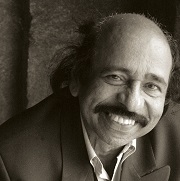
K. Sachidanandan is an Indian poet and critic writing in Malayalam and English. A pioneer of modern poetry in Malayalam, a bilingual literary critic, playwright, editor, columnist and translator, he is the former Editor of Indian Literature journal and the former Secretary of Sahitya Akademi. He is also a public intellectual of repute upholding secular anti-caste views, supporting causes like environment, human rights and free software and a well-known speaker on issues concerning contemporary Indian literature.