Indian Fiction: The Changing Landscape
The ever-inventive Indian imagination has been weaving an endless web of tales from time immemorial, right from the tribal tales and the fables of Panchatantra, the stories of Brihatkatha, Brihatkathamanjari, the Jataka tales and the tales of the Vikramaditya to the novels and stories of our own traumatic times. Modern fiction emerged in India from an intimate interaction between this storytelling tradition and the Western, especially British, fiction in the Nineteenth century. Despite Milan Kundera’s claim that novel is essentially a European form, Indian novelists have handled the genre with aplomb and have made novel, and short story to a lesser extent, the chief mode of articulating their visions of life and society. In the post-Clolonial era, Indian fiction, both in the languages and in English entered a process of self-renewal in content as well as in form, in its attempt to grasp the profound contradictions of India’s fast-changing socio-political and psychological reality, its new mores and modes of perception and the fresh social dynamism set in motion by the emergence of hitherto marginalized sections of the society into democratic awareness. While the new Indian novel in English has attracted international readership, more novels in the languages too are getting translated into English and European languages than ever before. The Frankfurt Book Fair in 2006 with India as the Guest of Honour a second time, and the Paris Book Fair with accent on Indian writing that followed have both demonstrated the new enthusiasm Indian fiction has generated among readers and publishers in the West.
It has become a cliché of literary criticism to say that the novelists in the so-called Third World “narrate the nation”; however on closer scrutiny we find that the novelists narrate not one, but many nations, each imagining the nation and conjuring it into being in his or her own way, and often bringing a multiplicity of perspectives into play through a variety of characters from different strata of society. An activist Bengali writer like Mahaswetadevi or an Assamiya writer like Birendrakumar Bhattacharya privileges the tribal perspective ( eg, the former’s Aranyer Adhikar, Right to the Forest or the latter’s Iyyaru Ingam, People’s Region); a Tamil writer like Bama ( eg; Kurukku and Sangati) , a Marathi writer like Lakshman Gaikwad ( Uchalya) or Saran Kumar Limbale ( Akkarmashee), a Gujarati writer like Joseph Macwan ( eg; Angaliyat), a Kannada writer like Siddalingaiah ( Ooru Keri) or Devanoor Mahadeva (eg, Kusumabale) an Oriya writer like Gopinath Mohanty ( eg; Paraja, the Outcaste) or a Telugu writer like Unnava Lakshminarayana (eg; Malappally) might portray the reality of the Dalit (downtrodden, untouchable) life with its sense of disgrace , its moral beauty and its desire for social emancipation. There are regional novels where particular regions and local histories are at the centre of attention like Phaniswar Nath Renu’s Maila Anchal ( The Soiled Region), Rahi Mazoom Raza’s Adha Gaon ( A Village in Halves) in Hindi, Tarasankar Banerjee’s Arogyaniketan or Shivram Karanth’s Chomana Dudi ( Choma’s Drum) or U. R. Ananthamurthy’s Bharatipura in Kannada , or M.T. Vasudevan Nair’s Nalukettu ( Ancestral House) , S.K. Pottekkaatt’s Oru Desathinte Katha ( The Story of a Village), Thakazhi Sivasankarapillai’s Kayar or M. Mukundan’s Mayyazippuzhayude Theerangalil ( On the Banks of River Mayyazhi) in Malayalam or Sundararamaswamy’s Oru Puliyamarathin Kathai ( The Story of a Tamarind Tree) in Tamil. The partition of India is a recurring theme in post-Independence fiction as in Sunil Gangopadhyay’s Purbo-Paschim ( East and West) in Bengali, Khushwant Singh’s A Train to Pakistan in English or Yashpal’s Jhoota Sach ( The Untrue Truth) in Hindi or Qurratulain Hyder’s Aag ka Dariyaa ( The River of Fire) in Urdu as in the Urdu stories of Saadat Hasan Manto, Kishan Chandar and R.ajinder Singh Bedi.
Historical novel has remained a favourite genre with Indian writers right from the beginning of novel in India.Shyamal Gangopadhyay in Bengali (eg; Darashuko),Vrindavan Lal Verma in Hindi(Jhansi ki Rani, the Qeen of Jhansi), Masti Venkatesha Iyengar in Kannada( Chikkaveera Rajendra), Ranjeet Desai in Marathi( Swami), Surendra Mohanty in Oriya (Nila Saila,The Blue Mountain) and Viswanatha in Telugu (Ekavira) are some examples.Together such writers have covered a long span of history from the twelfth century to the present with rare imagination and historical insight.O.V. Vijayan, M. Mukundan, Sethu, N.S. Madhavan and Paul Zacharia in Malayalam, U.R. Ananthamurthy , Chandrasekhara Kambar and Poornachandra Tejaswi in Kannada, Sundararamaswamy and Jayamohan in Tamil, Suresh Joshi in Gujarati, Bhalchandra Nemade in Marathi and Nirmal Verma , Krishna Baldev Vaid and Vinod Kumar Shukla in Hindi have all contributed to the modernization of the genre by bringing in the complexities of modern life- particularly its angst and alienation- and inventing new structures and idioms that best express their fresh perceptions of life and mind. The rise of a number of women writers in the languages in recent years has ensured the representation of women’s issues and women’s perspectives in Indian fiction.They reexamine the patriarchal canons and litearry practices,re-vision myths, reinterpret epics and forge a counter-language and found an alternative semiotics of the body and beyond. Established women novelists like Kamala Das, Amrita Pritam, Krishna Sobti, Ashapurna Devi, Ajeet Cour, Lakshmikantamma, Lalitambika Antarjanam, Pratibha Ray, Indira Goswami and Nabaneeta Dev Sen have now been joined by scores of new and powerful writers from Sara Joseph, Gracy and Sitara of Malayalam to Ambai of Tamil,Volga of Telugu,Bani Basu of Bengali, Moushmi Kandali of Assamese ,Sania of Marathi and Geetanjali Sree of Hindi.There is a whole new generation of talented writers in all the Indian languages from Nabarun Bhattacharya in Bengali ( eg, Herbert) and Alka Saraogi in Hindi ( Kolikatha via Byepass) to Jayamohan in Tamil ( Vishnupuram) and K.P. Ramanunni in Malayalam ( Jeevitathinte Pusthakam, The Book of Life) who have already proved their credentials as novelists of great talent. While a few of these masterpieces are available in English thanks to publishers like Sahitya Akademi, National Book Trust, Katha, Macmillan, OUP, Penguin, Affiliated East-West, Orient Longman, Rupa, Seagull and several others, a greater part of the excellent Indian writing in the languages is waiting to be discovered by the larger world.
Indian fiction in English began receiving wider international acclaim with the publication of Salman Rushdie’s Midnight’s Children. This is not to forget the contributions of pioneers like R. K. Narayan, RajaRao, Bhabani Bhattacharya, Mulk Raj Anand, Nayantara Sehgal, Anita Desai and others. But there certainly has been a paradigm shift with the appearance of Rushdie, Vikram Seth, Amitav Ghosh, Allan Sealy and Arundhati Roy who are free from the self-doubt that seemed to have tormented their predecessors. These writers and those who follow, like Kiran Nagarkar, Kiran Desai , Rohinton Mistry, Gita Hariharan, Mukul Kesavan, Shama Futehally, Amit Choudhuri, Rukun Advani,Vikram Chandra, Altaf Tyrewala, Shashi Deshpande, Jhumpa Lahiri, Manju Kapur, Ruchir Joshi, Radhika Jha, Hari Kunzru, Anita Nair, Attia Hosain and several others are not apologetic about writing in English; they consider English a legitimately Indian language and use it with great ease and creativity.They share discoursal devices and genres with their language-counterparts. If R.K. Narayan’s Malgudi Days, Raja Rao’s Kanthapura and Arundhati Roy’s God of Small Things are sthalapuranas or local histories, Allan Sealy’s Trotternama follows the pattern of the nama or the Indian chronicle. Kiran Nagarkar’s Cuckold is a new form of hagiography, Sasi Taroor’s The Great Indian Novel is a mock-epic and Vikram Seth’s Golden Gate is in the verse narrative tradition.The direct use of Malayalam words in The God of Small Things and the employment of native usages and proverbs as well as local customs and manners in the works of Khushwant Singh, Bhabani Bhattacharya, Raja Rao, Kiran Nagarkar, Kiran Desai, Kaveri Nambisan and Vikram Seth point to a process of the nativisation of English. Works like Salman Rushdie’s Midnight’s Children, Upamanyu Chatterjee’s English, August and Amitav Ghosh’s Sea of Poppies demonstarte a self-conscious questioning of linguistic boundaries. The new novelists interrogate the ‘purity’ of Indian culture, accept English as part of a sub-continental polyphony and refuse to privilege either tradition or modernity. The thematic range of the new English novel is astonishingly wide : the fissures in the body-politic( Beethoven Among the Cows), rising communalism ( The Little Soldier), Emigration ( The Glass Palace, A Sea of Poppies), the divided immigrant self ( Satanic Verses), disorienting loss ( Afternoon Rag), post-Colonial history (Midnight’s Children, Shame, Trotternama), the celebration of hybridity( Moor’s Last Sigh, The Enchantress of Florence), the question of identity ( Namesake) and the changing Indian village (Nectar in a Sieve, Sunlight on a Broken Column) are only some of the major thematic concerns raised by these novelists. A new and lighter kind of writing seldom worried about literariness has also emerged with the work of writers like Chetan Bhagat, Samit Basu and Meenakshi Madhavan. Blogs, e-zines and internet are also fast changing the nature of literary communication in India.It is quite likely that unexpected pathways may open up under the pressures of the market economy, globalisation and forced homogenisation of cultures.The inner cartography of liberalized India is likely to foreground new ethical questions about our social behaviour towards refugees , immigrants and the still un-mainstreamed populations, like the questions already raised by Rana Dasgupta and Kiran Desai in their recent works.
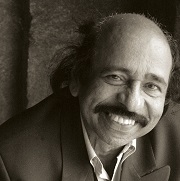
K. Sachidanandan is an Indian poet and critic writing in Malayalam and English. A pioneer of modern poetry in Malayalam, a bilingual literary critic, playwright, editor, columnist and translator, he is the former Editor of Indian Literature journal and the former Secretary of Sahitya Akademi. He is also a public intellectual of repute upholding secular anti-caste views, supporting causes like environment, human rights and free software and a well-known speaker on issues concerning contemporary Indian literature.