Language Into Language
On the Translation Scenario in Malayalam
The need for translation can hardly be overemphasised in a multi-ethnic and plurilingual country like India with its 1652 mother tongues, twenty-two scheduled languages, fifteen scripts and twentyfive writing systems (1962 Census). India’s is in fact a translating consciousness. We keep translating almost every moment of our life. Multilingual creativity and polyglot fluidity have been the very defining characteristics of Indian literature. One can even say that Indian literature begins with translations, adaptations, elaborations and interpretations, especially of the epics, Mahabharata and Ramayana. Translations from and into Sanskrit, Persian, Arabic and modern Indian languages knit together communities, languages, regions, religions and cultures. The very words for translation in the Indian languages reflect the freedom we allowed our translators, for example, bhashya means an interpretation and vivarta means one phenomenon of the essence, like the world is a phenomenon of the Supreme Self. The Ramayanas of Ezhuthacchan, Pampa, Kambar, Molla, Premananda, Ekanatha, Balaramadasa, Tulsidas, Krittibas or Madhav Kandali, while based mostly on the same text in Sanskrit are all different from one another as the poets adapt the story, indigenise the narrative, localise the setting, add, delete, epitomise , elaborate and interpret episodes according to their will. Those familiar with Father Kamil Bulcke’s Ramkatha and the collections of essays edited by Paula Richman, Three Hundred Ramayanas, Questioning Ramayanas: a South Asian Tradition and the recent Ramayana Stories in Modern South India will be aware of the variety of the Ramayana tradition in South Asia and the works the epic has inspired. The deviations the poets made from the original text were not derided, but were extolled as the proofs of their poetic genius, and translation in India does not have martyrs like Etienne Dolet, the sixteenth century French translator of Plato, who was executed for the freedom he took with the original text. Our ancestors never considered the ‘original’ as something sacred; even Jnandev while translating the Gita as Jnaneswari knew that he was making his own version for his Marathi readers who had no access to the original. He says: ‘ The Gita is like a trusting mother from whom, I, her child, have wandered away’. He admits with his great humility that he is only like a titibha bird trying to sound the depth of the ocean with its tiny beak. A modern translator, Dilip Chitre, the translator of the saint-poet Tukaram as also of the dait poet Namdeo Dhasal, admits how difficult it is to recreate the dramatic ritual of a ‘possessed’ language in Tukaram, how he had to make Tuka’s work appear here and now , yet suggesting that it is really out there. In Namdeo, the difficulty comes from the dynamism, verve and magic of the language of the original that forced him to create a parallel in English. This understanding and the denial of a permanent ‘originary’ is perhaps close to the Buddhist thought as evidenced by Vagrakhedika or the Diamond Sutra that speaks of the body as well as the subject as ever being in a flux and man as never the same in two consecutive moments. This idea of self as flux, of the decentred and discontinuous subject and the absence of originary is very close to the ideas of Jacques Lacan , the French psycho-linguist. From Bhartrhari onwards, long before Jacques Derrida, we have believed that meaning exists in language not as a positive presence but as an absence which reflects an independent presence. Indian linguistics since the Sphota theory has seldom suffered from the anxiety about the loss of the origin.This marks a departure from the Western approach where , in the words of Hillis Miller, translation is ‘the wandering existence in a perpetual exile’, alluding to the Fall of Man in the Bible and his banishment from Paradise. The myth of the Tower of Babel further underlines the idea that man has been cursed to speak many languages after the loss of the original tongue. Concepts like ‘ translator is a traitor’ ( Italian saying), ‘Poetry is that which is lost in translation’ (Robert Frost), ‘all translation is simply an attempt to solve an insolvable problem’ ( Humboldt) and ‘translators can offer us only a vague equivalent’ (Virginia Woolf) are expressions of a Western world view. In India we have always lived with a multiplicity of languages and dialects, which forms the very source of the richness and diversity of our literature, and many of our writers from Kabir, Meera, Nanak and Vidyapati to A.K. Ramanujan, Jayanta Mahapatra, Kiran Nagarkar, Adil Mansoori and Kamala Das have been bilingul if not multilingual. Translation in India in the pre-colonial days was an open dialogue among our own languages and cultures , between our own cultural past and present, and with other cultures. It was a revitalisation of the original through another writer’s imagination and an ‘intimate reading’ of the original –to use Gayatri Chakravarty Spivak’s phrase-done from diverse perspectives. During the colonial days it also became a stategy of hegemony and containment and reflected in its selection of texts the Orientalist ideology that constructed a Brahmin-Hindu India of mystics, magicians, charming princes, innocent and vulnerable oriental beauties and of wild and pristine nature as so convincingly brought out in Romila Thapar’s study of the travel of Kalidasa’s Sakuntala into Western languages. But it is fair to say that even this colonial ideology of selective appropriation and cautious canonisation kept the process of translation alive in India and also stimulated the growth of forms like the novel, short story, elegy, sonnet, prose-drama and others though India had its own poetic, narrative and dramatic traditions and forms centuries before the British came. Only, to quote Andre Lefevere “Western cultures ‘translated’ ( and ‘translate’) non-Western cultures into Western categories to be able to come to an understanding of them, and, therefore, to come to terms with them.” (‘ Composing the Other’ in Post-Colonial Translation, Theory and Practice, eds. Susan Bassnet and Harish Trivedi, London-Newyork, 1999). This of course does not preclude the possibility of a reverse process where the colonized, empowered by the colonizer’s language, like Friday in Coetze’s Foe, ‘writes back’ to the colonizer and translation becomes a tool of subversion and resistance.
The case of Malayalam in the field of translation is not very different from that of other Indian languages except that Malayalam has been to this day one of the two or three Indian languages that have made translation an organic part of its very existence and evolution. Literate Malayalis have grown up, along with original works in the language, on translations from Sanskrit, Bengali, Hindi, Arabic, Persian, Chinese, Japanese, English, French, German, Italian and others. The history of Malayalam literature is inseparably entwined with that of translations that have played a crucial role in the formation of Kerala’s public sphere, the awakening called Kerala Renaissance, the growth of radical politics and various literary trends and movements from critical realism and progressive literature to modernist, feminist, dalit and post-modern tendencies, not to speak of the creation of new genres like the novel, short story, modern lyric, sonnet, elegy, the sequence poem and the like.
The history of Malayalam literature too starts with translations, especially of the Ramayana. R. S. Varmaji, a Malayalam scholar has listed 197 important independent works based on Ramayana in Malayalam, 19 translations and 24 works of prose. One may consider Ramacharitam, probably written in 12th century A.D. , to be the earliest of Ramayanas in Malayalam. It is a free rendering of the Yuddhakanda of Valmiki’s Ramayana composed in indigenous meters with the specific features of the prosody in Dravidian languages. The author Cheeraman, often identified with a Travancore king on insufficient grounds, shows considerable poetic skill and absolute command over the poetic language full of Tamilisms. The hero here is even more prominent than in Valmiki and the style, grander. The dominant rasa is veera. It also shows some influence of of the Adhyatma Ramayana in Sanskrit and of Kampa Ramayana in Tamil. Kannassa Ramayana, probably a fifteenth century composition, is a pattu (song) rendering of the Valmiki Ramayana in 3059 mellifluous quartrains. Kannassa, or Niranam Ramapaniker, has condensed the original in certain portions and added to it portions translated from other works in Sanskrit. Ayyappilla Asan’s Ramakathappattu probably composed towards the close of the fifteenth century, shows the overwhelming influence of the colloquial Tamil spoken in the bilingual areas of Southern Travancore. Though not very popular, this version used to be sung in the Vaishnava temples of South Kerala to the accompaniment of a small drum called chandravalayam. Ramayanam Champu attributed to Punam Namboothiri of the late fifteenth century , the culmination of the highly sanskritized Manipravalam tradition in the language, seems a free rendering of Bhoja’s Ramayana Champu and follows its high-flown style. It is composed chiefly in Sanskrit meters interspersed with short pieces of indigenous meters taken for varieties of prose. The work foregrounds the aesthetic rather than the religious aspect and was intended as a text for pathakam, a one-man dramatic performance held in temples. Hence, the humorous, the dramatic and the erotic aspects are evoked in abundance. There are many other translations like the eighteenth century Kerala Varma Ramayanam that faithfully and felicitously translates the first five cantos of Valmiki’s work, Vennikulam Gopala Kurup’s loyal translation of Tulasidas’s Ramcharit Manas, Dr. S. K. Nair’s translation of Kampan’s Tamil Ramayana, Vallathol Narayana Menon’s translation of Valmiki’s Ramayana that follows the metrical patterns of the original, a free prose translation of this text by C. Damodara Menon and the prose translation of the Balakanda from the same text by Dr T.A. Sankar, besides dozens of independent and semi-dependent Ramayanas whose description can be seen in my introduction and afterword to Retelling the Ramayana, Voices from Kerala (Oxford University Press, NewDelh, 2005).
However it was Thunchath Ezhuthacchan’s Adhyatma Ramayanam composed in the sixteenth century that went on to become the most popular of all the Ramayanas in Malayalam and is regularly read in many Kerala homes even today. I have dealt with the significance and special features of this work in detail in an earlier study, ‘Ezhuthacchan’s Adhyatma Ramayana and the Ramayana Tradition.’ ( Ramayana through the Ages, Ed. Avadhesh Kumar Singh, D. K. Print World(P) , New Delhi, 2007, pp 181-210 )This work, a free rendering of the Sanskrit Adhyatma Ramayana, a portion of the Brahmandapurana in 64 cantos and 4200 verses, attained prominence as a Bhakti text that expounds advaita philosophy and elevated Ezhuthacchan to the status of ‘the father of Malayalam language’ revered across castes and religions. Ezhuthacchan being a soodra not supposed to sing the divine song presents the tale as a song sung by a parrot. Edassery Govindan Nair, a later poet , in a tribute to him says how Ezhuthacchan first pierced with his iron stencil the chaturvarnya that denied his caste the study of the vedas before he began writing the Ramayana that brought vedic wisdom and the egalitarian message of the Upanishads to the whole people of Kerala. He has introduced several hymns and ethical and philosophical discourses as his own in the course of his adaptation. He employs indigenous meters and adapts them to suit the mood of various kandas. The style is racy, fluent with a native flavour and often attains the heights of inspired utterance. Vivid descriptions, bold portrayal of characters, dramatic dialogues and stuctured narration interspersed with philosophic discussions together made this Ramayana phenomenally popular. It has all the freshness of an independent work.
Ezhuthacchan was a social reformer and a great teacher who pioneered a renaissance in Malayalam letters at a time when Kerala, especially Malabar, was suffering from social decadence and aggression from forces inside and outside the country. His Adhyatma Ramayana shows how a translation-even if free- can become a classic with the traditional classic qualities of centrality and sanity. Though influenced by Ramanuja, he refused to accept the varnasramadharma that the Visishtadvaitins supported on the basis of the Gita as he was against all man-made hierarchies and was thus squarely in the subaltern Bhakti tradition. Adhyatma Ramayana, along with his other works including Sri Mahabharatam, Bhagavatam and Harinamakeertanam, created a new verbal discourse and elevated the poet to the status of a true renaissance figure in the civilizational history of Kerala. Of course this raises important political questions about translations and their crucial civilizational role, like the ones asked by Tejaswini Niranjana and Gauri Viswanathan: Who translates? For whom? What is it that gets translated? From which language into which language? What are the relative historical positions of the author and the translator and their affiliations in terms of gender, caste, class and nationality? In the classical case of Ezhuthacchan, a man from the lower varna of the soodras and of the lower class, was making the translation of a popular text from the hegemonic Sanskrit into the subaltern Malayalam in a style accessible to the people, thus emancipating his language from its servitude to Sanskrit by absorbing its knowledge and its textual wealth, thus empowering his language and his people at the same time. This was what made his translation an act of cultural emancipation just like that of those who translated Latin texts into modern European languages to emancipate the ‘vulgate’ from the Latin hegemony by absorbing its discourses.
Another landmark translation in Malayalam is that of Mahabharata in the version attributed to ‘Vyasa’ by Kodungallur Kunhikkuttan Tampuran. Completed in in 1906, Bhasha Bharata done in just 874 days, is a verse to verse and meter for meter translation of Vyasa Bharata and earned the translator the title, ‘Kerala Vyasa’. Ezhuthachan had already done a free version of Mahabharata, one that again was in the form of a kilippattu, a song sung by a bird, like his Ramayana, that had eleven thousand couplets in the place of one lakh and twenty thousand verses in the Vyasa version. Many scholars think that this, along with another work, Bharatamala that takes off from this, was based on some summary version that must have pre-existed both of them. But Tampuran’s was an authentic translation in the modern sense. Later Vidwan P. Prakasam did a prose translation of Mahabharata for those who wanted a more popular version of the narrative. This is besides the many partial translations and adaptations. But one cannot but observe that the Mahabharata did not get the same popularity as Ramayana in the Ezhuthacchan version got in Kerala: one reason may be the popular belief that reading Mahabharata creates tensions at home while reading Ramayana brings good luck and deliverance from suffering. There are about 40 translations of Bhagavat Gita in the language done in verse and prose and a whole series of interpretations of the text from various points of view including scientific ( K. Venu)and Marxist.( Dharmaraj Adat) Vallathol’s translation of Rigveda as well as that of O. M. C. Namboodiripad, and G. Balakrishnan Nair’s versions with interpretations of the chief Upanishads have also enriched the metaphysical litearture in the language.
The translation of Sanskrit texts soon caught up as it was a recognised way of getting qualified as a scholar and as the Sanskrit literary works were supposed to set the right norms for the bhasha writers to follow and emulate. Malayalam was also seen as a language close to Sanskrit as it has a good percentage of words and expressions derived from Sanskrit — there was even a time when the language was supposed to have originated from Sanskrit eventhough its structure and grammar are typically Dravidian. The translation and interpretation of Kautilya’s Arthasastra, Bhashakautileeyam had already appeared in the 12th century, and by the 14th , Sanskrit epics, lyrics and plays began to appear in translation.
The history of drama in Malayalam begins with the publication of Kerala Varma’s translation of Kalidasa’s Abhijnana Sakuntalam in 1852. This also prompted so many translations of Sanskrit poetry that Munshi Ramakurup had to write a satire , Chakkeechankaram to check this deluge. Kerala Varma Valiya Koyithampuran also did a translation of Anyapadesasatakam by Neelakanta Deekshitar. His version while preserving the ideas in tact fauled to keep the suggestivenes and brevity of the original. Kilimanoor Raghava Variyar’s translation of Magham and Puliyur Purushothman Namboothiri’s translation of Naishadham, along with the translations done by Kundoor Narayana Menon , Varavoor Samumenon and others were attempts to domesticate some of the most difficult works in Sanskrit- difficult both in terms of semantic games and sound-games. A. R. Rajaraja Varma’s translations of Kalidasa were earnest efforts to capture the sublimity and grace of the great poet’s nuanced works. They have been criticised by scholars who have at the same time admitted that it is not A.R’s inability so much as Kalidasa’s suggestive richness that is responsible for this inadequacy, especially of his translation of Sakuntalam. In fact most of us have benefitted more from the prose translations of all of Kalidasa’s major works done by Kuttikrishna Marar, the great critic, whose texts carry the original verses, word meanings, total meanings and interpretations of each sloka. Kalidasa’s Meghadootam has had several translations in Malayalam other than those of A.R. and Marar , like those by T. R. Nair, and V. Chandrababu who follow the mandakranta meter of the original. Others like A.R. Rajarajavarma, G.Sankarakurup and Thirunellur Karunakaran have employed longer metrical patterns since translations of Sanskrt verses into Malyalam require more letters and words than in the original especially because of the sandhi and anvaya systems in the language. The most aesthetically satisfying translation of this poem for Malayalees has been Meghasandesam by Thirunellur Karunakaran who has privileged the culture of the target language, used a Dravidian meter making his rendering deeply musical and sensuous. Devageeta, the unrivalled translation of Jayadeva’s Gitagovindam by Changampuzha Krishna Pillai is another instance of a poem discovering its real translator.
There are more than 150 translations of Sanskrit plays in Malayalam. Abhijnana Saakuntalam alone has had forty versions. Other translations include those of Malavikagnimitram by A.R., Vikramorvaseeyam and Ascharyachoodamani by Kunjikkuttan Tampuran, Uthararamacharitam by Chathukkutty Mannadiyaar, Bhasa’s Swapnavasavadattam by Vallathol, Soodraka’s Mricchakatikam by Kesava Bhatteri and Bhasa’s Oorubhangam and Bodhayana’s Bhagavadajjukeeyam by Kavalam Narayana Paniker who has also produced these plays on the stage.
Of the modern Indian languages, most translations have been made from Bengali, Hindi and Tamil where direct translators are available. There was a time when most of the weeklies in Malayalam, Janyugam, Matrubhumi and Navayugam for example, serialised the translation of a novel from Bengali or Hindi regularly in their issues. Even now weeklies like Matrubhumi continue the tradition though the range of languages is now larger. There are more than 260 works translated from Bengali into Malayalam while the Malayalam works translated into Bengali are less than a dozen, an unequal exchange that speaks volumes about the opennes of Malayalam vis-a-vis Bengali at least in relation to Indian languges. Tagore’s Gitanjali alone has had several translations, both the Bengali original with 157 verses and the English version with 103 verses of which only 53 are in the Bengali Gitanjali. L. M. Thomas has done a prose translation of the Bengali Gitanjali , as also done later by V. S. Sharma and K.C. Pillai. But the most well –known translation is that of G. Sankarakurup who has retained the metrical patterns of the original poems: he also has done an excellent translation of Ekottarasati as Noottonnu Kiranangal ( 101 Sunbeams). N. Gopala Pillai has also done a Sanskrit translation of Gitanjali while a new prose translation of the English Gtanjali has been done by K. Jayakumar. These translations have had some impact on poets like G. Sankarakurup, Sugatakumari, O. N. V. Kurup and Yusuf Ali Kecheri both at the philosophical and at the stylistic levels. Several poems of Jibanananda Das have been done by Ayyappa Paniker and K. Satchidanandan while Satchidanandan has also translated some poems by Subhash Mukhopadhyay and Bishnu Dey bisides a book of selected poems of Nazrul Islam in collaboration with Nileeena Abraham for the Kerala Sahitya Akademi. Of the Bengali novels the first to be translated was Bankim Chandra Chatterjee’s Durgesanandini done by C. S. Subramanian Potti. Other Bankim novels in Malayalam are Anandamatham, Kapalakundala, Vishavriksham, Rajani and Krishnakantante Maranapatram. The eight novels by Saratchandra Chatterjee including Parineeta and Srikanta available in the language, though now considered sentimental, have influenced some of our novelists: I suspect the genre of the popular serial novel published in some of the weeklies is derived from Saratchandra’s translations, though the Bengali author had a larger understanding of relationships.. Rabindranath Tagore’s Gora, Yogayog and some other novels and short stories have been done in Malayalam along with most of the important works of Bibhuti Bhushan,Tarasankar Banerjee- Arogya Niketan being a recognised classic in translation and often a textbook in colleges -, Manik Banerjee, Bimal Mitra, Ashapurna Devi, Mahasvetadevi, Jarasandhan, Shankar, Bimalkar, Dibyendu Palit, Sirshendu Mukhopadhyay, Shyamal Gangopadhyay, Sunil Gangopadhyay, Savitri Roy, Narayan Gangopadhyay, Premendra Mitra, Buddhadev Guha, Buddhadev Bose, Ramapada Choudhuri, Nabaneeta Dev Sen and several other major and minor novelists. The realistic novel in Malyalam has learnt a lot from the narrative techniques of these novels. The plays of Tagore and Utpal Dutt also have found adequate traslations and performances. Their translators like Puthezhathu Raman Menon, V. Unnikrishnan Nair, V. R. Parameswaran Pillai, P. Madhavan Pillai, Nileena Abraham,, K. Ravivarma, M. N. Satyarthi, Leela Sarcar and Anand have made the Bengali novelists household names in Kerala. Most of these translations have ben done directly from Bengali while some have been done from faithful Hindi versions. The novelists translated into Bengali are chiefly Vaikom Muhammed Basheer and Thakazhi Sivasankara Pillai. While the poets who have had book-length translations are G. Sankarakurup, Ayyappa Paniker and Satchidanandan.
Hindi comes next to Bengali in the volume of translations done into Malayalam. The Dakshin Bharat Hindi Prachar Sabha was quite active in Kerala in the pre-Independence days, and Hindi became a second languge popular with students in the post-Independence era: this must have contributed to the visible presence of Hindi in the translation scene. E. K. Divakaran Potti’s translations of Premchand’s famous novels like Godan, Sevasadan, Nirmala and others were a chief inspiration behind the Progressive Movement in Malayalam, along with the translations of Balzac, Emile Zola, Tolstoy and Maupassant.. Yashpal also gained popularity in Malyalam through the translations of several novels including Party Comrade, Amita etc, the most popular of them hpwever being Niram Pidippicha Nunakal, a translation of Jhoota Sach by P. A. Variyar. Several masterpieces of Hindi fiction like Jaysankar Prasad’s Titaly, Vrindavan Lal Verma’s Mrignayni, Hazari Prasad Dwivedi’s Banbhatt kee Atmkatha, Bhagvathee Charan Verma’s Bhoole-Bisare Chitra, Amrit Lal Nagar’s Amrit aur Vish, Phaniswar Nath Renu’s Maila Anchal, Bhishm Sahni’s Tamas and Mayyadas kee Madeee, Sreelal Shukla’s Rag Darbari, and Alka Saraogi’s Kolkatta via Bye-pass besides works by Jainendrakumar,Nirmal Verma, Kamaleswar, Bhirav Prasad Gupta and others have enriched Malyalam fiction in translation. The chief translators have been E. K. Divakaran Potti, K. Ravivarma, P. Madhavan Pillai, V. D. Krishnan Nampiar, Sudhamsu Chaturvedi, P. K. Ravindranathan Nair, V. K. Raveendranath, K. V. Kumaran, K. Radhakrishnan and others. Jaisankar Prasad’s epis poem Kamayani has found a Malayalam translation as also several poems by Nirala, Raghuveer Sahai, Dhoomil, Sarveswar Dayal Saxena, Kedarnath Singh, Kunwar Narain, Ashok Vajpeyi and others.K. Satchidanandan has published an anthology of contemporaray Hindi poetry directly done from Hindi that features more than twenty poets. He has also translated Sreekant Verma’s Magadh into Malayalam. Plays by Mohan Rakesh, Dharmveer Bharati and Swadesh Deepak have also appeared in Malayalam. Rati Saxena, a Hindi speaker settled in Kerala, has translated the selected poems of Ayyappa Paniker into Hindi. Poets like G. Sankarakurup, O.N. V. Kurup, Sugatakumari and K. G. SankaraPillai have also appeared in Hindi translations while there are six collections of translations of poetry (done by Rati Saxena, Girdhar Rathi, Rajendra Dhodapkar, Santosh Alex, Kedaranath Singh, Manglesh Dabral, Asad Zaidi, Anamika, Gagan Gill and others) and one of essays( done by Anamika with a group of scholars) by Satchidanandan, in Hindi. Novels and stories by Thakazhi, Basheer, Karoor, Kesava Dev, C. Radhakrishnan, M. Mukundan, Punathil Kunhabdulla, Madhavikkutty, Sara Joseph, K. P. Ramanunni and several others have also appeared in Hindi, thanks mostly to translators from Kerala.
Translations from other north Indian langauges are few and far between as there are almost no direct translators from these langauges into Malayalam. Most of these translations have been done from Hindi or English translations. This was the case of V. S. Khandekar’s three novels including Yayati as also of Godavari Parulekar’s Manushyar Unarunnu while Laxman Gaikwad’s Uchalya, Lakshman Mane’s Upara and Saran Kumar Limbale’s Akkarmashee were done directly from Marathi by Kaliyath Damodaran. Other writers translated into Malayalam include K. M. Munshi, Gulabdas Broker ( Gujarati), Amrita preetam, Gurdial Singh, Ajeet Cour ( Punjabi), Birendrakumar Bhatacharya, Indira Goswami (Assamiya), Fakeer Mohan Senapati, Kalindeecharan Panigrahi, Gopinath Mohanty, Pratibha Ray ( Oriya) and K. A. Abbas, Kishan Chander, Rajindersingh Bedi and Sadat Hasan Manto (Urdu). In poetry, Sitakanata Mahapatra’s Shabder Akash has been translated by Satchidanandan from English and Hindi versions while Ramakanta Rath’s SreeRadha has been done by P. M. Narayanan and Gopalakrishnan from the poet’s own English version. Satchidanandan has also edited an anthology of thirty Indian Women poets from different Indian Languages ( Muppatu Indian Kavayitrikal) besides translating several poets from diverse tongues included in his collection, Kavitaparyadanangal. His own collections have appeared in Oriya, Punjabi, Assamiya, Gujarati and Urdu (two collections).
Let us now look at the South Indian langauges with which Malayalam as a Dravidian language has a strong kinship. There have been around 140 translations from Tamil into Malayalam. They include the works of the Sangam era like Pathitruppathu, Purananooru, Ahananooru , post-Sangam works like Thirukkural, Silappadikaram, Manimekalai, Naladiyar and Athichoodi, Bhakti texts like Thevaram, Thirumantiram, Pattinathar Padalhal, Thayumanavar Padalhal,and Kambaramayanam and prabandhas like Kalingathupparani. Of these the most noted ones are S.K. Nair’s translation of Kampa Ramayana, S.Ramesan Nair’s translation of Thirukkural, N.V. Krishna Variyar’s translations of Aham (domestic) and Puram (social) poems and Attoor Ravivarma’s translation of Tamil Bhakti poetry published by the Sahitya Akademi. Attoor Ravivarma has also done a beautiful and representative collection of modern Tamil poetry besides novels like Sundara Ramaswami’s J. J. Sila Kurippukal ( J.J., Some Notes)and Oru Puliyamarathin Kathai.( The Tale of the Tamarind Tree). Other novelists translated include Kalki ( Parthipan Kanavu), M. Varadarajan (Mancherathu), N. Parthasarathy ( Thulaseemadam, Samudayaveethi), Jayakantan ( Pavam Ival oru Pappathi, Jaya Jaya Sankara, Chila Samayangalil Chila Manushyar), Akhilan ( Chithiappava, Stree, Ponmalar, Koottukari) and Vasanthi( Punarjanmam). C. A. Balan has been a prolific translator of fiction from Tamil. Bama’s Dalit novels, Karukku and Sangati have been rendered by Vijayakumar Kunissery who has employed a Malayalam dialect parallel to the one used by Bama. In fact the modern period has seen greater exchange between Malayalam and Tamil due to the common interests developed by modern writers as also due to the presence of writers with bilingual competence like Neela Patmanabhan, Thoppil Mohammed Meeran, Sundara Ramaswami, Sirpi Balasubramanian, Sukumaran, Kurinjivelan, Shailaja and others in Tamil. A lot of contemporary writers in Malayalam including fiction writrs like Vaikom Mohammed Basheer (many novels)M. T. Vasudevan nair ( Nalukettu, The Ancestral House), O. V. Vijayan ( the novel, Khasakkinte Itihasam, The Legends of Khasak as well as stories ), M. Mukundan ( the novel , Mayyazhippuzhayude Theerangalil, On the Banks of River Mayyazhi, as well as stories), Madhavikkutty( Kamala Das), Paul Zacharia and N. S. Madhavan ( all, selected short stories) and poets like Satchidanandan (five books, four of poetry and one on Marxist aesthetics) and Balachandran Chulikkad (memoirs,Chidambarasmaranai) have found well-received translations in Tamil. There are also anthologies of poetry and short story by younger writers. Little magazines like Kanayazhi and Kalachuvadu and publishers like Kavya and Meetchi have contributed to this spurt in translations from Malayalam to Tamil. This is besides the routine translations done by the Sahitya Akademi and National Book Trust from and into Tamil of significant and award-winning works.
The exchanges with Kannada have not been so active due to the paucity of direct translators. A single translator, C. Raghavan from Kasargode, a border town- border towns always play a crucial role in cultural exchanges as we know- has been a major conduit for the two literatures. He has done excellent versions of U.R. Ananthamurthy’s novels like Samskara, Bharatipura and Avasthe besides works by Srikrishna Alanahally ( Kadu, Bhujangayyante Dasavatarangal),Chandrasekhara Kambar (Chingaramma) etc into Malayalam. Some other works that have been popular in Malayalam are novels by Sivarama Karanth ( Malyude Makkal, Maranathinu Sesham , Mannileykku Madangi, Mukajjiyude Kanavukal), Niranjana ( Chirasmarana) and B.V. Karanth ( Chomante Tudi). The translators include K. V. Kumaran, K. P. Sankaran, A.V. M. Narayanan and K. Rama. Kannada is not as receptive as Malayalam to other literatures, yet Raghavan has translated the selected poems of Ayyappa Paniker into Kannada besides some modern novels like those of O. V. Vijayan and M. Mukundan. Some of the plays by Girish Karnad and H.S. Shivaprakash have found good translations in Malayalam. H. S. Shivaprakash has a collection of poems by Satchidanandan in an excellent Kannada translation. Vivek Shanbhag’s new little magazine, Deshkaal has also been featuring younger writers of both fiction and poetry from Malayalam, from N. S. Madhavan to P. Raman.. Keralakavita, a Malayalam journal for poetry edited by Ayyappa Paniker, featured many Kannada poets in translation : Gopal Krishna Adiga’s famous work ‘Bhoomigeete’ was done by the poet Madhavan Ayyappath while a lot of post-Adiga poets were translated by K.G. Sankara Pillai and B. Rajeevan. The journal also published a play by P. Lankesh.
The exchanges between Telugu and Malayalam have been minimal , again as there are not many direct translators. G. Subbaramayya has translated Thakazhi’s Randitangazhi and Chemmeen, and C Radhakrishnarao has done Basheer’s Ntuppuppakkoranendarnnu into Telugu while M. T. N. Nair has done many Telugu stories into Malayalam. Desamangalam Ramakrishnan in collaboration with Bhaktavatsala Reddy has done an anthology of contemporary Telugu poetry in Malayalam. L. R. Swami has also done a collection of the poems of Satchidanandan into Telugu while Satchidanandan has translated some poems by Sri Sri, and the digambara poets from Telugu with help from a Telugu speaker.
Malayalam is a language that has borrowed words generously from any number of languages, both Indian and foreign. There is even a version of Malayalam used in Moppla songs called ‘Arabi- Malyalam’ that shows the influence of Arabic on the language. There are also several common words from Hebrew, Aramaic, Persian, French, Portuguese, Dutch, German and English. Malayalis are a composite people, belonging to many religions and races making impossible any talk of ethnic purity or religious fundamentalism. This openness is reflected also in the way translations are done and received in Kerala. The translations of the Holy Bible played a key-role in the evolution of prose style in Malyalam comparable to that of Adhyatma Ramayana in the evolution of the poetic style. The first of these translations was published in 1811, printed in the Courier Press , Bombay. It was a collective effort in which Peelipose Ramban from Kayamkulam played the central role. This was a direct translation from Syriac which then was compared with the Tamil version that had already come out in 1714. The translation had several words kept in the original Syriac language like ‘keppaleyon’ ( chapter), ‘oreta’ (old testament), ‘yevan galion’(gospel), ‘masumoor’( psalm), ‘mamoodeesa’ (baptism) and ‘bawa’ ( father)- the last two words are now commonly used in Malayalam. Many proper nouns were also in the Syriac form. The next translation was done under the supervision of Benjamin Bailey by a group of scholars who specialised in the different languages in the original Bible: Vaidya Natha Iyer, a Sanskrit scholar, Mosa Eesan Fathy who was proficient in Hebrew and Chathu Menon, a Malayalam munshi who had been baptised. The New Tesatament in Malayalam came out in 1829 from the C. M. S. Press, Kottayam and the complete book was published in 1842. This time the language was closer to Sanskrit than Tamil and became a model for modern prose in the language. Herman Gundert , the German missionary who gave Malayalam its first grammar and dictionary, was not happy with this translation and did his own version of the New Testament ( 1868) In 1910. Another version done by a committee is still considered the authentic version of the Holy Bible in many quarters. These Protestant translations were folowed by several Catholic versions from 1905 to 1983. Bible is part of Malayali’s literary culture and one finds references to many situations and episodes in the Bible in the daily conversations of Keralites of all religions, not to speak of the great works of poetry it has inspired in the last century.
Holy Quran has also had many translations in Malayalam. A partial translation as published by Janab K. M. Moulavi in 1930. Two complete translations were later done by Amani Moulavi and P. M. Idassery Moulavi, one after the other. The most popular version however is the one by C. N. Ahmed Moulavi, published by the National Book Stall in 1973. This was followed by several translations in the late 70s and 80s done by single translators as also by groups. The latest in the series are the one done by a group of three scholars , published by Kitab Mahal, Kozhikode in 1991 and another done by Abdul Vappa published by Islam International Publications Limited, London. There are too, many translations done from the English and Urdu versions. Konniyur Raghavan Nair has done a verse translation based on Yusuf Ali’s 1934 English version. The early versions of Quran were printed in the Arab- Malayalam script while later versions were done in the proper Malayalam script that created a lot of problems in the pronunciation of words, especially proper nouns. Translating a text in a difficult, complex and poly-semantic language like Arabic into simple, readable Malayalam must have been a real challenge to the translators. There is also a translation of Lao Tzu’s Tao-te Ching.
Along with the translations of Sanskrit plays, the translations of Greek plays and Shakespeare’s works too helped set the standards for drama in Malayalam. C.J. Thomas, himself a great dramatist did exemplary translations of Oedipus Rex and Antigone while S. Guptan Nair did a sensitive version of The Trojan Women. The history of Shakespeare translations in the language dates back to 1866 when Kallur Oommen Philippose translated The Comedy of Errors as Almarattam. In 1888 Diwan Rao Bahadur Govinda Pillai translated The Merchant of Venice as Portia Swayamvaram. From 1866 to 1930, there was a steady series of Shakespeare translations after which the pace slowed down under the impact of the realistic plays of Ibsen, Strindberg, Maeterlink and Galsworthy. The Shakespeare translations in the language are too many to recount here; they fall into three categories: word-to-word translations like A. J. Varkey’s translation of Hamlet or Madassery Madhava Variyar’s Merchant of Venice, Tempest and Midsummer Night’s Dream that the readers found prolix and cumbersome; adaptations where the locale and names and conexts have been localised like Varughese Mappilai’s Kalahineedamanakam, an adaptation of Taming of the Shrew where the original cuture gets lost or transformed and hence cannot play the role of real translations; and free translations that readers welcomed for their evocative power and dramatic directness like M. R. Nair’s Othello and Kainikkara Kumara Pillai’s Antony and Cleopatra. In 2000 ‘The Comlpete Works of Shakespeare’ was published in Malayalam in three volumes- the first, of comedies, the second, of historical plays and poems, and the third, of tragedies and romances with Ayyappa Paniker as general editor: This has all the plays translated by academics, writers and theatre activists, the chief of them being P. K. Venukkuttan Nair, P. Narayanakurup and K. Ramachandran Nair. The narrative poems have been done by Ayyappa Paniker and the sonnets by Satchidanandan. The translations of plays are not of uniform quality , but this is, presumably, the first full translation of Shakespeare in any Indian language and is thus a landmark, useful to the common readers as well as students who have little or insufficient access to the original. It is clearly a challenge to translate Shakespeare into any language, especially an Indian one, since the cultural nuances and the historical backgrounds along with the linguistic and stylistic peculiarities specific to Shakespeare are hard to carry into a language like Malayalam. As the translator of the sonnets in the book, I know how the pithy idiom with its secret allusions, raw emotions and overstatements that now look ridiculous resists transference. In spite of my best efforts, I found it difficult to retain the 14-line sonnet-structure as Malayalam always needs more words than in the original while translating from English.
Other major Western plays that have found translations in Malyalam include Ibsen’s plays like Ghosts (Kesari Balakrishna Pillai, 1936),Master Builder, Lady from the Sea, Enemy of the People and When the Dead Wake (Dr Ramachandran Nair) and Pillars of the Society( M. K. Variyar). Enemy of the People has had a translation also by T.N. Gopinathan Nair while Rosmer Sholm was adapted as Mullaykkal Bhavanam by C. Narayana Pillai. They are all done from different English versions. Since William Archer’s English versions themeselves are said to be stiff and formal compared to the Norwegian originals, their Malyalam translators had to work hard and take some freedoms to retrieve some of the original fluency of the dialogues. Even names at times get changed like Irene becoming Ireena or Squire Ulfeim becoming just Mr. Ulfeim. Deaconess becomes ‘nun’ in English and kanyastree in Malayalam. The German expression of affection for a younger person, ‘mein kind’, s just left out in Malayalam. ‘O, dear!’ which is an exclamation in English has been literally translated as if it meant ‘my dear’. But there are also many positive changes and elucidations where it was felt necessary to make a suggestion clear. Kadammanitta Ramakrishnan, a well-known poet, has translated Samuel Beckett’s Waiting for Godot, the play that is central to the Absurd theatre movement. This play poses a real challenge to any translator as it is made up as much of silences as of words. English and French sayings, slangs, jokes, puns, one-line conversations in the manner of what Greeks call stichomythia: all these elements go into the making of the play. Ramakrishnan, helped by Adoor Gopalakrishnan, the famous Film-maker, has generally done a good job and the play has also been staged successfully. But there are also funny mistakes :eg.Vladimir’s expression, ‘I remain in the dark’ that means I am ignorant about it, has been translated literally as if the character were speaking at night. ‘ I have lost my Kapp and Paterson’ in the first scene refers to the brand name of a pipe, but it is translated as it is, which will leave the audience really in the dark unless explained. There are similar errors, but again there are compensations where adaptations have ben made with propriety as for example where Western dance forms referred to by Pozzo have been translated into Indian dance forms. Other translations of plays include some plays by Wole Syinka and Ionesco, six plays by W. B. Yeats ( K. Satchidanandan) and Brecht’s plays like Mother Courage (Sudha Gopalakrishnan), The Vagabond or the Dead Dog ( G. Sankara Pillai) and The Trial of Lucullus (K. Satchidanandan).
In poetry from abroad, Omar Khayyam’s Rubaiyat has had the maximum number of translations in Malayalam, though they are all translations from the free Fitzgerald version of 1859. Clearly that version was a product of the Orientalist understanding of the Eastern world, yet its power was felt even by modern poets like T. S. Eliot who said about its impact: “ Like a sudden conversion: the world appeared anew painted with bright, delicious and painful colours”. Even after the fresh translations of Arthur J. Arbury (1952), Robert Graves and Peter Avery (1993) from the original Persian, the free Fitzgerald version has not ceased to be popular or decanonised. The translators of Rubaiyat in Malayalam- each version has a different name- include M. P. Appan, Sardar K. M. Paniker, Ampady Raghava Potuval, Puttankavu Mattan Tarakan, V. Madhava Menon, G.Sankara Kurup, Changampuzha Krishna Pillai, Nityachaitanya Yati and K. Jayakumar. The most popular and musical of them is Changampuzha Krishna Pillai’s version titled Madirotsavam. That the translator had shared the original poet’s vision and attitude to life to a great extent may have something to do with the passion in his verses. K. Jayakumar has translated Rumy’s selected verses and edited a collection of the works of Khalil Gibran whose Prophet has found many translations in the language. Changampuzha has done some poems by Hafiz as also Solomon’s Song from the Bible that K. Jaykumar translated in prose recently. Some progressive Arabic poets of our time like Nissar Khabbani ( Tr. K. G. Sankara Pillai) and Mahmoud Darwish ( Tr. K. Satchidanandan) too have found Malayalam translations along with the Turkish poet, Nazim Hikmet. ( Tr. K. G. Sankara Pillai and K. Satchidanandan)
Translations of poetry from the West has also a long history in Malayalam. G. Raman Menon translated Milton’s .Paradise Lost as Parudeesanashtam. C. S. Subrahmanian Potti did some Tennyson and Arnold. Kumaran Asan translated Edwin Arnold’s Light of Asia as Buddhacharitam. In fact most Malayalam poets including Idassery, Vailoppilly and Sugatakumari have done some translations of poetry. P. Sankaran Nambiar, Pallathu Raman and others translated some major romantic and Victorian English poets including Wordsworth, Shelley, Byron, Browning and Tennyson. We have already spoken of Changampuzha who also did Japanese haiku, and lyrical poems by Heine, Thomas More, Lyonidas, Catullus, Goethe, Schiller and Shelley. Ayyappa Paniker has done a translation of T.S . Eliot’s The Wasteland which is beautiful in parts though the literal loyalty has also had its awkward syntactical effects. He has also done some of the poems of Baudelaire, Mayakovsky and Pablo Neruda besides a whole book by the Cuban poet Nicolas Guillen and some Rumanian poets. His greater service has been his editing Kerala Kavita , the poetry journal that encouraged poets to translate poetry from abroad. Poets like Voznesensky from Russia( Attoor Ravivarma) Lorca from Spain (O.N.V. Kurup, later done also by Kadammanitta Ramakrishnan, Satchidanandan and D. Vinayachandran), Chairil Anwar from Indonesia(Satchidanandan), Zbignew Herbert from Poland (Satchidanandan), Senghor from Ghana and Octavio Paz from Mexico (Kadammanitta Ramakrishnan did The Sunstone , and later Satchidanandan did many poems from East Slope) and Bertolt Brecht from Germany ( V. C. Chacko) are but some of the poets thus translated.
Translations of poetry played a crucial role in shaping the political sensibility of poets in the 1970s and 80s. The new wave began with the translations of European poets of the Left along with some Black poets done by Satchidanandan and K. G. Sankara Pillai in a special issue of Navayugom weekly that included poets like Paul Eluard, Louis Aragon, Stephen Spender, Charles Madge, Archibald Mac Leish, Margaret Walker, Langston Hughes, Nissar Khabbani and others. This was followed by Satchidanandan’s translations of Pablo Neruda that has gone into several editions,besides his books of translations like 100 Russian poems( Alexander Blok, Mayakovsky, Evtushenko, Zabolotsky, Anna Akhmatova, Akhmadulina etc), 100 poems by Bertolt Brecht, Latin American Poets ( Paz, Neruda, Vallejo, and several others), Black Poets from three continents, ( David Diop, Aime Cesaire, Leroi Jones etc), European Poets( Lorca, Amichai, Montale, Quasimodo, Zbignew Herbert, Attila Jozef , Gabor Gare etc) , Chinese poetry of Lu Hsun and Mao, Vietnamese poetry of Ho-Chi-Minh, Swedish Poetry ( 20 poets) etc. all of which, already collected in different books,are now being collected in 3 volumes of about 1800 pages.
The story of the novel in Malayalam in a way begins with translation: O. Chandumenon, the author of Indulekha, originally wanted to translate Lord Beaconsfield’s novel, Henrietta Temple, but then he thought an adaptation or imitation will be better appreciated by his wife and by general readers. So he wrote a fresh novel using that narrative mode that became a trend-setter. It is impossible to recount here the translations of novels from outside India into Malayalam. One of the translations that played a crucial role in the evolution of Malayalam fiction is that of Victor Hugo’s Les Miserables by Nalappat Narayana Menon published under the title, Pavangal in 1925 - 28 (he also translated Edwin Arnold’s Light of Asia and Reynold’s Mysteries of the Court of London and did an adaptation of Oscar Wilde’s Lady Wintermere’s Fan as Vesuvammayude Visari); this exposed Malayalam writers to the range and depth of European realism and provided a new model for prose writing. Edappilly Karunakara Menon’s translations of Russian classics like Tolstoy’s War and Peace and Dostoevsky’s Crime and Punishment and N. K. Damodaran’s translations of Dostoevsky’s novels including Karamazov Brothers along with M. V. Pylee’s translation of Turganev’s Fathers and Sons again inspired a lot of writers in Malayalam. The Progressive novel in Malayalam got a boost from these novels as also from the translations of Gorky, Maupassant, Zola and Balzac . Vilasini( M.K. Menon) has three excellent translations: Pedro Paramo (Juan Rulfo) Kurudan Moonga (Sadiq Hidayat) and Sahasayanam (Yasunari Kawabata). The period of modernism saw a spurt of translations in addition to these novels: some of the authors whose works have been translated are Nikos Kazantsakis, Albet Camus, Franz Kafka, Jean Paul Sartre, Gabriel Garica Marquez, Mario Vargas Llosa, Yukio Mishima, Orhan Pamuk, Jose Saramago, Elfriede Jelinek, Naguib Mahfouz, Milan Kundera, Umberto Eco, Sholom Aleichem and Paulo Coehlo. Once when N. S. Madhavan , one of our finest fiction writers, was asked who the most popular Malayalam novelist was, he answered it was Gabriel Garcia Marquez! This statement though made in joke testifies to the popularity of such writers in Kerala. P. Viswanathan’s translation of Lu Hsun as also of a story by Sivan played a model-role in the radical shortstory of the Nineteen Seventies. Many Indian English writers like Mulk Raj Anand, R. K. Narayan, Raja Rao, Menon Marath, Sasi Tharoor, Jaisree Misra, Salman Rushdie, Anita Nair, Jhumpa Lahiri etc have also found translations in Malayalam. The mainstream magazines like Mathrubhumi, Janayugom, Navayugom, Madhyamam, Desabhimani, Bhashaposhini, Mangalodayam and Kalakaumudi as well as little magazines in Malayalam- Navasahiti, Gopuram, Keralakavita, Sameeksha, Aksharam, Jwala, Prasakti, Sankramanam, Pachkkutira, Nagarakavita etc have contributed significantly to the promotion of translation- the former, of canonised works, and the latter, of avant-garde writing.
I have little time to go to the translations of non-literary works here. That continues to be still weak, despite some translations of Philip Frank, Marx, Lenin, Mao, Adam Smith,Gramsci, Bertrand Russell, J. D. Bernal, Stephen Hawking, D.D. Kosambi, Romila Thapar, Bipan Chandra and others from different disciplines. The inadequacy of vocabulary and the small number of competent translators may be two of the main reasons for this backwardness. The place of translations is here taken up by secondary and tertiary writings on Marxist, feminist, structuralist and post-Structuralist thinkers. Works of poetics and aesthetics by Bharata, Abhinavagupta, Plato, Aristotle, Longinus, Beneditto Croce etc have found good translations along with works of grammar and style like Tholkapiyam and Paniniyam. Children’s books also have been translated to a limited extent, directly chiefly from Russian and a few from German, Japanese and other languages through English versions.
Harish Trivedi once said: “The ultimate question before us in India… is where to situate ourselves and our literary culture vis-à-vis the new post-colonial cultural configuration. Are we going to align ourselves, sooner rather than later, with the great Anglo-American axis, as a nation and as a people who read and write only in English? Or do we have the strength of our local earthy smells to hold out against the linguistic and cultural totalization, this increasing monolingual authoritarianism? In this case, shall we wait to be translated into English or any other language on our own terms, as do China, Japan, East Europe and Latin America?” (‘Translation: Its Theory and Practice’ in The Politics of post-Colonial Translation, ed. A. Singh, Delhi, 1996). Translation in English is part of a world-wide cultural exchange. The impact of Indian literature in English translation and its representational claims have to be looked at not only in the context of Indian readership or market, but of world readership, as translation wields enormous power in constructing representations of foreign culture. Changed perceptions of the source culture can sustain stereotypes or erode them. So Harish Trivedi’s caution is sound, but we also need to see English translations as a profound response to a sociological truth of our times. English translation is a forum made inevitable by dominance as well as democracy. On the one hand it does consolidate the hegemony of English, but it also makes the source text relatively free of hierarchies of caste and of language. This may be why Dalit spokesmen like Kancha Ilaiah and pro-Dalit intellectuals like S. Anand support the spread of English as against Sanskrit.
Translations from Malayalam into English have not been as frequent as those from or through English into Malayalam. The chief agents of such translations have been the two Akademies, in the state and at the centre ,and the National Book Trust, who among them have translated novels like those of Thakazhi, Uroob, Karoor, Kovilan, M.T.Vasudevan Nair, Lalitambika Antarjanam,V. K. N., C. Radhakrishnan, M. Mukundan and others. Penguin has published novels by Malayattoor Ramakrishnan, O.V. Vijayan, M. Mukundan and Anand and selections of stories by Paul Zacharia and O.V. Vijayan besides an anthology of shortstories (Wind Flowers)by different writers edited and translated by R.E. Asher and V. Abdulla. Another anthology of 40 Malayalam short stories edited by K. Satchidanandan has been published by the National Book Trust. Of the early novels in the language, O. Chandumenon’s Indulekha was translated first by W.Dumergue (1890, Ernakulam, republished by Matrubhumi, 1965), then by Leeladevi as Crescent Moon (1979) and more recently by Anitha Devasia. (Oxford University Press, 2005) It is interesting that Dumergue ignores the novel’s tensions, paradoxes and the finer multil-accented details of the transformations Chandumenon attempts as he wrestles with modernity at various levels, in what Partha Chatterjee would call the task of creating ‘our modernity’ ( ‘Talking about Our Modernity in Two Languages’ in A Possible India, Essays in Political Criticism, Delhi, 1998) and Leela Devi treats the novel more as a romance than a political-cultural enterprise. C.V.Raman Pillai’s Martanda Varma was done by K. Madhava Menon and Ramaraja Bahadur by his daughter, Prema Nandakumar. ( Sahitya Akademi) The Book Review Literary Trust has brought out Saraswativijayam, a dalit novel of the nineteenth century by Pothery Kunhambu in Dileep Menon’s translation. East-West under their Manas imprint published Zacharia’s Bhaskara Patelar and Other Stories (Tr. by Zacharia, A. J. Thomas and Gita Krishnankutty) and Mukundan’s On the Banks of River Mayyazhi. (Tr. Gita Krishnankutty). Katha has published collections of stories and short novels by Basheer, Zacharia and Anand besides including several stories by different writers in their annual anthologies. Stree has brought out a collection of Lalitambika Antarjanam’s stories and memoirs, Cast Me out if You Will. ( Tr. Gita Krishnankutty).Rupa has published K. P. Ramanunni’s Sufi Paranja Katha ( A Tale told by the Sufi), and O.N.V. Kurup’s long poem Ujjayini. Macmillan has brought out some novels by Madambu Kunjikkuttan ( Outcaste), Sethu ( Pandavapuram,) and N. P.Muhammad( The Eye of God) Oxford University Press has published some stories by Sara Joseph with a play by C. N. Sreekantan Nair ( Kanchanaseeta) based on Ramayana ( Retelling the Ramayana,Tr. Vasanthi Sankara Narayanan) and M.T. Vasudevan Nair’s novel, Nalukettu. Orient Longman has published Anand’s Death Certificate in their Disha series while Penguin has published his Marubhumikal Undaakunnathu as Desert Shadows. Kamala Das’s Sandalwoodalongwith A collection of M. Mukundan’s stories translated by Don Tree and A Doll for the Child prostitute are available in English along with The Kept Woman and Other Stories published by OM Books. Donald R. Davis Jr. has been brought out by the University of Michigan. ( The Train that had Wings). Arnold Heinemann has published the translation of three Basheer novels ( My Grand dad’d an Elephant) and The Scavenger’s Son by Thakazhi Sivasankara Pillai in R. E. Asher’s translation.
To turn to poetry, the selected poems of Balamani Amma translated by the poet has been brought out by Orient Longman (as also a collection of stories by Madhavikkutty). Kerala University has published a collection of Vallathol’s poems and a lot of Asan’s works were brought together by M. Govindan in a special Englsh number of his journal, Sameeksha. Ayyappa Paniker has three books of poetry in English, Ayyappa Paniker’s Poems, Days, Nights and I Can’t Help Blossoming , most of the poems translated by the poet himself, brought out by different publishers. Seven collections of Satchidanandan’s poetry have been published from different houses like Harper-Collins, Delhipoetree, Har-Anand, Nirala, Olive and Konark. E.V. Ramakrishnan has edited an anthology, The Tree of Tongues, published by IIAS, Shimla that has given good representation to modern Malayalam poetry; Satchidanandan’s anthology of modern Indian poetry, Signatures, published by the National Book Trust also has quite a few Malayalam poets. Michigan University had published two special issues of South Asian Litearture on Malayalam literature edited by Ayyappa Paniker later reissued as a book. Journals like Malayalam Literary Survey ( Kerala Sahitya Akademi), Haritam ( M. G. University)and Indian Literature (Sahitya Akademi) have played a crucial role in translating contemporary fiction and poetry. One major difficulty of translating from Malayalam, especially fiction,-as it must be with other languages too- has been the use of dialects in conversation. Most works get translated into a standardised demotic register in English so that they lose a lot of their specificity and location, both geographic and social. While on the one hand it creates a ‘Malayalam Literature’ or a ‘Marathi Literature’ , or even an ‘Indian Literature’, it also bulldozes a lot of differences that had originally made these works significant and different, though the readers of the original texts may continue to see this plurality of registers. What Talal Asad said may be right: “ All good translation seeks to reproduce the structure of an alien discourse within the translator’s own language. How that structure(or ‘coherence’) is reproduced will of course depend on the genre concerned(‘poetry’, ‘scientific analysis’, ‘narrative’ etc), on the resources of the translator’s language, as well as on the interests of the translator and/or his readership.” ( ‘The Concept of Cultural Translation in British Social Anthropology’, in Writing Culture: The Poetics and Politics of Ethnography, California, 1986 ) Derrida too supports the idea of the existence of several languages within one linguistic system. He asks: “How is a text written in several languages at a time to be translated? How is the effect of plurality to be ‘rendered’? And what of translating with several languages at a time, will that be called translating?” ( The Ear of the Other, New York, 1985) We come across instances of this plurality of registers in several Malyalam works from C.V. Raman Pillai’s Martanda Varma or Basheer’s Anavariyum Ponkurisum ( Anavari and Ponkurisu- nicknames for two characters) to O.V. Vijayan’s Khasakkinte Itihasam (Legends of Khasak), Narayan’s Kocharethi ( The Little Fisherwoman) or N. S. Madavan’s Lunden Batteriyile Lutteeniyakal (The Littanies of the Dutch Battery). Even Kalidasa’s Sakuntalam loses its stylistic plurality- the masters speaking Sanskrit and women and servants speaking Prakrit or Paisachi, reflecting the class-gender inequalities in his society- when translated into standard Malayalam.
Translations from Malayalam into European languages are even rarer. The Book Fairs at Paris and Frankfurt with focus on India did give some space to Malayalam: M. Mukundan’s novel, Mayyazhippuzhayude Theerangalil, O.V. Vijayan’s Khasakkinte Itihasam , and Satchidanandan’s selected poems ( Tant de vies) were done directly into French by competent French translators and published in Paris while Zacharia’s stories and Satchidanandan’s poems (Ich glaube nicht an Grenzen) besides two anthologies of Malayalam writing (Welche Farbe hat die Liebe?, Drei Blinde beschreiben den Elefanten, carrying poems by eleven poets and stories by eighteen fiction writers) were released at the Frankfurt Book Fair- these translations however were done mostly by Malayalees in German departments in various Universities in India and Germany. Ayyappa Paniker’s Gotrayanam and Satchidanandan’s selected poems ( I Riti Della Terra) have appeared in Italian done by Italian translators and published from Rome. Some Malayalam poems by Satchidanandan and Balachandran Chullikkad and stories by Chandramati have appeared in a Swedish anthology, Roster Indien. Most European publishers publish only direct translations and such translators are not many. That is why more Indian books written in English get translated into them than books in Indian languages.
Looking at the translations into Western languages, one can see that more contemporary works have been translated than older ones and more fiction than poetry, drama and other genres. This naturally brings up the question of the canon and of taste. Except for the translations done by the public sector/autonomous undertakings, the nature of selection is determined mostly by those who control the publishing houses, that is, the market, as also by what is availabale and what competent translators choose to translate. It has something to do with the mainstream canon in the source langauge, while translations also revise the canon to some extent. For example, when a dalit novel like Saraswativijayam gets translated into English, it revises the very perception of Malayalam novel by the readers in English and perhaps even the readers in the source language who now begin to think of the novel as important. There are also different factors including the political that decide what gets translated into the language. The Marxist ideology has certainly played a role behind the translation of authors like Gorky, Howard Fast, Bertolt Brecht or Pablo Neruda into Malayalam and the modernist ideology has promoted the translation of canonical modernist works by Camus, Sartre, Beckett, Eliot and others. Thus the choice is shaped by shifts in sensibility while the translations further consolidate the sensibility that in the first place chose those works.
There is too the question of the homogenization that happens when a regional text with a special local flavour gets translated into English. Theorizations on translations need to problematize the very phenomenon of translation itself as it is not a transparent activity as the traditional approach assumes, nor is it a universal, trans-temporal activity with fixed agendas and values and certain determinate qualities of a ‘good’ translation irrespective of the specific situation that a particular translation emerges from. The functions and values of translation keep changing as the source and target languages are not, as is sometimes assumed by discursive institutions like universities, complementary poles waiting to be completely and transaparently renderd into each other. As Derrida observes, these institutions cannot bear the transformation that leaves in tact neither of these complementary poles and challenges the assumptions of nationalism as also of universalism. ( ‘Living on: Borderlines’ in Deconstruction and Criticism, ed. G. Hartman, Newyork, 1995). The act of translation always implies a theory of culture: ‘a set of assumptions about the ways in which linguistic forms carry cultural meanings’ ( Sherry Simon, ‘Translation and Cultural Politics in Canada’ in Translation and Multilingualism: Post-Colonial Contexts, Delhi,1997) In the post-Colonial situation like ours, this cultural baggage assumes special significance as culture itself is a mutable construct there, created out of the translational contact of the languages of the colonizer and the colonized. Discourses claiming originality are actually rooted in an incessant chain of translations: this further problematizes the act of translation and the privileging of the original and the authentic in it. Translation in a sense precedes originality: To quote Octavio Paz, “ each text is unique, yet at the same time it is the translation of another text. No text can be completely original because language itself, in its very essence, is already a translation-first from the non-verbal world, and then, because each sign and each phrase is a translation of another sign, another phrase.” ( ‘Translations of Literature and Letters’ in Theories of Translation: An Anthology of Essays from Dryden to Derrida, Chicago,1992) This might take us back to our original argument about the nature of translations in India.
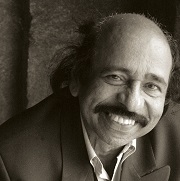
K. Sachidanandan is an Indian poet and critic writing in Malayalam and English. A pioneer of modern poetry in Malayalam, a bilingual literary critic, playwright, editor, columnist and translator, he is the former Editor of Indian Literature journal and the former Secretary of Sahitya Akademi. He is also a public intellectual of repute upholding secular anti-caste views, supporting causes like environment, human rights and free software and a well-known speaker on issues concerning contemporary Indian literature.