Malayalam Poetry Today: Part 3
Bengal with its radical manipulation of archetypes, its mixing of the dramatic and narrative modes, its quick rhythms and refrains that capture the panic of the blind king and its interweaving of the history of the society and of poetry, was to set the tone for young poetry for a whole decade. Sankara Pillai’s own poems like Anandan that delves into the psychology of the Indian middle class with its ambivalent attitudes to social change, Nissabdata (Silence) that sees the promise of revolt in the silence of the home and the work place, and Kashandi (Baldness) that attacks the cowardice of the intellectuals that fear the truth, articulated the despair and the anger of the ‘midnight’s children’. Kadammanitta Ramakrishnan’s poems viewed Indian reality from the point of view of the marginalized, especially the adivasis, (eg; Kattalan-the savage, Kiratahahvritham- the Tale of the Outcaste, Kurathi-the Kurava woman being good examples) while Ravivarama in his poems like Piravi ( The Birth), Sankramanam ( The Transition), and Ottovin Pattu ( The Song of the Autorikshaw) commented on the present that announces a new birth and transforms the meek into the terrible. Satchidanandan’s poems like Satyavangmoolam,( My Testament), Pani ( Fever) and Idavela ( The Interval) tried to articulate the dishonesty of the intellectuals, the wrath of the subaltern and the hope of a more just society while also expressing a change in the mode of looking at poetry. By the time the Emergency came to be declared, Malayalam poetry was ready to respond to it through various means like irony, humour and allegory. M.Govindan’s Prarthana ( The Prayer), Ayyappa Paniker’s Kadukka ( The Gallnut ) used black humour and irony to laugh at the plight of freedom while Satchidanandan’s Navumaram ( The Tree of Tongues) invoked the folk mode to speak of people’s resistance and ultimate victory against dictatorship as also the poet’s victory over censorship symbolized by the severed tongue of the singer growing up into a tree of tongues. Many poets underwent incarceration during that time while many poems were disallowed by the censor.
The poetry of the Seventies as the radical poetry of the decade is generally called, marked a transition form the lyrical to the dramatic mode. Dialogues replaced the monologues of the earlier decade, and prose, often forthright and sinewy, came to be used widely as a poetic medium. The idiom came closer to everyday speech and symbols, images and metaphors became charged with political meaning.
The local came to the fore in the Malayalam poetry of the Eighties. The failure of the federal polity made writers think more in terms of the regional and linguistic identity than national identity. Attoor Ravivarma’s poem Pandi (Pandi is a typical Keralite form of percussion-1987) Here a man who had left his village and served for thirty years in a hotel in the city comes back to the village to see that all the signs that had marked his native place apart have disappeared. He feels like an alien as no human being or beast or plant recognises him. He tries to recall what he has lost. Then he hears the pandi percussion from the rural temple. The drums and pipes and the percussionists and the listening ears are all new; yet the rhythm has retained its distinctiveness. It is a moment of the recovery of the self for him. Nervazhikal, ( Straight Passages) edited by Satchidanandan foregrounds this new regional perspective. K. G. Sankara Pillai’s poems like Kadambanattu Kadambilla (There is no Kadamba in the Land of Kadambas- a play on the name of his native place) and Kochiyile Vrikshangal ( The Trees of Kochi) and Satchidanandan’s own series on Kerala including the poem on his language, Malayalam along with the poems of Ayyappa Paniker, M. Govindan, D. Vinayachandran etc are attempts to listen to the voice of the collective unconscious of the Malayali and replicate it in region-specific forms. Thus they fought the narcissistic urges of early modernism as also the illusion of an impending revolution that characterised the Seventies. In the Eighties as well as Nineties there was a resurgence of typically regional themes: local histories, legends, celebrations, rituals, heroes and heroines, flora and fauna. There was also the deployment of regional rhythms and meters and a rejuvenation of native ways of seeing and imagining.
The young poets who came up in the eighties and nineties have liberated the poetic idiom from the cliches of the Sixties as well as the Seventies. The best of them –Anwar Ali, T.P. Rajeevan, P. P. Ramachandran, K.R.Tony, P. Raman, Anita Thampi, Biju Kanhangad, S.Baiju, Rafeek Ahmed, P N Gopikrishnan, Veerankutty, Mohanakrishnan Kalady, Manoj Kuroor, Sarju, Sebastian, P.A.Nazimuddeen, Latheesh Mohan, M R Vishnuprasad, Kuzhoor Wilson, Nazeer Kadikkaad, M P Pratheesh, Ajeesh Dasan and scores of others- are extremely careful about form and have a nuanced understanding of language. Their poems are deeply suggestive and seldom loud or rhetorical. They are free from the morbidity of the early modernists as also from the revolutionary ambitions of the later ones. Many of them use everyday language for poetic expression. Two trends stand out in the newest poetry: one is that of women’s poetry, not overtly feminist yet recognisably feminine: the poems of Savitri Rajeevan and Vijayalakshmi belong more to the eighties while the newer poets include Anita Tampi, Rose Mary, Muse Mary,V. M. Girija, Lakshmeedevi, Rajani Mannadiyar, Kanimol, Saheera Tangal, Dona Mayoora, Girija Pathekkara and several others. Here is a poem by Anita Tampi: (tr. J. Devika)
Sweeping the Front Yard
The back aches,
as the broom sweeps
into memory, at dawn
soil-pimples sprouted,
on the front yard
of the house in slumber
eyes deep shut.
Perhaps the rain could have
eased the ground
last night.
Earthworms must have
stirred it under,
toiling ,may be sleepless, to
build tiny homes of earth.
Only to be razed,
to be spread,
in finger-streaks
the broom leaves behind.
After the sweeper girl’s
morning dance,
her Bent Backstep.
The sweeping done,
dawn alights
Light falls, the eyes
of the house open
No footprint,
Not even fallen leaves,
how clean it is!
The newspaper arrives
having scoured
the depths of night, it falls
stumbling against the door.
Then she rises from clearing the shreds
So thirsty, she’d drink the coffee to its lees.
The other trend is Dalit poetry whose origins have been traced to reformer-poets like Sahodaran Ayyappan, Poykayil Appachan and Kumaran Asan himself especially as represented in Duravasta ( The Tragic Plight) and Oru Tiyyakkuttiyude Vicharam ( The Thoughts of a Tiyya Boy). S. Joseph with three collections of poetry is undoubtedly the most important of these poets invoking a so-far unexpressed world of dalit experience in his poetry through a chiseled style that employs a lot of words and expressions used by the marginalised people of Kerala. Raghavan Attoli, M.B. Manoj, Vijila , S. Kalesh, M. R. Renukumar and many others represented in the recent dalit anthologies published in English are also striving to create an idiom that is modern and at the same time capable of expressing their specific dalit experience. There are literally scores of poets in all the four generations writing today in Malayalam using different registers and tones and rhythms and articulating a range of attitudes and world views. The present of poetry in the language is marked by this diversity as well as by a vitality that springs from poetry’s organic links with the people and the creative traditions of the land.
Blogs and other social media have encouraged a lot of poets who would otherwise have remained invisible to publish their poems for their circle of friends. Some of them are now known names. The first printed anthology of Malayalam blog poetry edited by K Satchidanandan ( Naalaamidam, Fourth Space)was published in 2010 carrying sixty poets. There are also a whole generation of poets from Kerala who write in English like Ravishankar, Rukhaya M K, Ampat Koshy, Chandramohan Hema Hemambika, babitha Justin Marin, K K Meera and others.
Let me close with two samples of recent poetry in Malayalam.The first is a poem by S. Joseph, a Dalit Christian poet (tr.Satchidanandan):
My Sister’s Bible
These are what my sister’s Bible has:
a ration- book come loose,
a loan application form,
a card from the cut-throat money-lender,
the notices of feasts
in the church and the temple,
a photograph of my brother’s child,
a paper that says how to knit a babycap,
a hundred- rupee note,
an S. S. L. C. Book.
These are what my sister’s Bible doesn’t have:
preface,
the Old Testament and the New,
maps,
the red cover.
The other is a poem by P. P. Ramachandran ( tr. Satchidanandan):
Simple
To let you know
I am here,
a sweet cry,
enough.
To suggest
I was here
drop a feather,
enough.
To prove
I will be here
the warmth of brooding,
enough.
How can birds
express life
simpler than this?
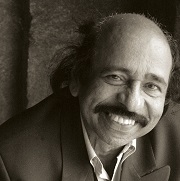
K. Sachidanandan is an Indian poet and critic writing in Malayalam and English. A pioneer of modern poetry in Malayalam, a bilingual literary critic, playwright, editor, columnist and translator, he is the former Editor of Indian Literature journal and the former Secretary of Sahitya Akademi. He is also a public intellectual of repute upholding secular anti-caste views, supporting causes like environment, human rights and free software and a well-known speaker on issues concerning contemporary Indian literature.