Malayalam Shortstory Today: Part 1
Malayalam short story celebrated its centenary in 1991. During the one hundred and fifteen years of its dynamic existence it has passed through several phases in terms of theme and idiom, structure and ideology. It is a history in which periods of gradual evolution alternate with periods of rupture, and syntheses are preceded by major aesthetic shifts and philosophic revolts.
After the near-retreat of the Progressive Movement, most of the writers preferred to follow the examples set by the two great writers of Kerala’s Renaissance, Uroob and Basheer. Their reading of Henry James, D.H. Lawrence, Virginia Woolf and James Joyce besides the European masters like Dostoevsky, Thomas Mann and Proust along with the impact of Freud led them to deeper explorations of inner life. Writers like T. Patmanabhan, M. T. Vasudevan Nair and Madhavikutty (Kamala Das) turned their attention from the outer drama of events to the inner drama of minds. The Post-Independence atmosphere of despair and disillusionment also compelled writers to concentrate more on effects than events, more on the subjective dimensions of experience than the objective social factors that constitute it. T. Patmanabhan’s ‘Death of Makhan Singh’, for example, is almost an interior monologue constituted mostly by memory and reflection. His stories, like those of M. T. and Madhavikutty, are subtle, lyrical and suggestive delineations of certain moods or little incidents that reveal a character or a relationship. M.T. had begun with the explorations of the inner world of the unhappy men and women of his village, a world of repression, desire and impotent rage. He soon moved on to the uprooted characters from the city nostalgic about their rural past, full of self-pity or self-contempt, often getting transformed into indignant social outcastes. ‘Sherlock’ where he expresses the suffocating solitude of life in exile through the relationship between a young man and a cat, belongs to his later phase. Writers like N. P. Mohamed and Kovilan too contributed to this orientational shift in short story. The dominant paradigm had changed, shifting the focus of the story from the social to the individual and action to contemplation, even from the conscious to the unconscious.
This introspective shift was completed during the Modernist phase that raised ontological questions. Kafka, Sartre, Camus, Salinger, Beckett and Borges were the most popular models. Death, solitude, alienation and loss of identity were the main preoccupations. It was also a period of formal experimentation and structural innovation when story was sen primarily as a linguistic artefact. Short story had become a metaphor that encapsulated a state of mind. Fantasy, surrealism, irony and black humour were the preferred tools. The young readers of the time, disgusted with the useless education they had received and the amoral society that surrounded them could easily identify themselves with these new anti-heroes tormented by self-doubt, angst and a sense of the absurd. Most of the pioneers of Modernism in Malayalam, O. V. Vijayan, M. P. Narayana Pillai, Sethu, Kakkanadan, M. Mukundan, Paul Zacharia, V. K. N. and Anand for example, lived in the big metropolises of India and wrote under the impact of the cities with their anonymous crowds, labyrinthine streets, squalor and sin. Some like O. V. Vijayan and Kakkanadan attempted to develop an oriental version of Modernism that combined an Upanishadic sense of the metaphysical with a Biblical sense of the tragic.V. K. N, Paul Zacharia and M. P. Narayana Pillai used irony and black humour in different ways to expose the hollowness at the heart of modern life .O. V. Vijayan and Anand also shared a moral political concern as they were disenchanted with the macabre real-politic being pursued by parties of all hues. The social renaissance in Kerala had lost its initial energy and focus, corruption had set in and even the left had become a part of the establishment. Mukundan’s anarchy, Zacharia’s cynicism, V K N ‘s sarcasm, Anand’s intellectual rebellion, Narayana Pillai’s irrationalism, V P Shivakumar’s pungent humour, Vijayan’s sense of the absurd and T. R’s spiritual questioning have their roots in the post - Independence social scenario in India even while they have learnt from the art of the Western writers. Hence Modernism is not a ‘cultural pastiche’ as some would love to call it. O V Vijayan’s ‘After the Hanging’ is at once the moving tale of a father’s journey to meet his son before he is hanged and a broader metaphor for the angst in the human condition itself. M.Mukundan’s ‘Photo’ while being the haunting tale of a nymphomaniac is also a bitter comment on our terrible times when innocence inevitably gets punished. This has been a recurring theme in Mukundan’s stories right from his early stories like ‘Tonsured Lives’. Zacharia’s ‘Some Mechanical Inventions for the Benefit of Mankind’ is typical of his unique kind of sarcasm and his unlyrical prose that reminds one of, say, Elfriede Jelinek.
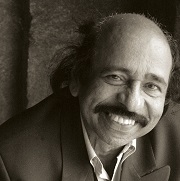
K. Sachidanandan is an Indian poet and critic writing in Malayalam and English. A pioneer of modern poetry in Malayalam, a bilingual literary critic, playwright, editor, columnist and translator, he is the former Editor of Indian Literature journal and the former Secretary of Sahitya Akademi. He is also a public intellectual of repute upholding secular anti-caste views, supporting causes like environment, human rights and free software and a well-known speaker on issues concerning contemporary Indian literature.