Malayalam Shortstory Today: Part 2
The pessimistic and cynical Modernist vision however was challenged in the 1970 s by a group of politically conscious writers that included Anand, M. Sukumaran, Pattathuvila Karunakaran, U.P. Jayaraj, P. K. Nanu, C.R. Parameswaran and others who in a sense historicized Modernism and wrote from the point of view of the victims of the system. Anand’s’Sixth Finger’ exemplifies his forays into history meant to reveal the irrational violence that has always accompanied power. There was also a group of writers who while being contemporaries of the Modernists refused to accept the Modernist paradigm and continued to explore the meaning of relationships among real men and women occupying real spaces. C. V. Sreeraman, Vaisakhan, Satrughnan, Gautaman, E.Harikumar, Mundur Krishnan kutty and S. V. Venugopan Nair deal with the fundamental passions and social questions in the realist mode.
The women writers of Malayalam too do not accept the Modernist understanding of life. Lalitambika Antarjanam was a product of Kerala’s renaissance that had raised fundamental questions concerning women’s status in society. She had quarrelled with the inhuman patriarchal customs, taboos and practices in her community.K. Saraswati Amma was even more open in her attack of the phallocentric order of life and thought. Rajalakshmi had shaped her intense stories from her immediate surroundings that later forced her to end her life at thirty five. With Kamala Das this tradition really comes of age. She explores the innermost recesses of the female psyche in her uninhibited portrayals of relationships. Her ‘Lost Nilambari’ deals with the drying up of marital love and the consequent nostalgia for the lost loves of youth. Sarah Joseph’s poetic stories are radical in their interrogation of hegemonic values and their inversion of patriarchal myths. ‘Inside Every Woman Writer’ epitomises woman’s agonising search for ‘a room of her own’, a space of creativity away from her humdrum household routines that seek to crush the artist in her. Gracy is a narrator of Desire, challenging the male world through the assertion of female sexuality.Her use of the fable to comment on the institution of marriage is as typical as Chandramati’s reversal of the Vikramaditya tales;both exemplify revisionist mythmaking that characterises a lot of Feminist writing today, Margaret Attwood’s ‘Penelopiad’ being a more recent example. Writers like Chandramati with their penetrating intelligence and sharp sarcasm have transcended the self-pity and the confessional mode that characterised a lot of early women’s writing in our languages. A.S.Priya, Sitara, K R Meera, and Indu Menon are some of the youngest women writers writing in Malayalam today. Priya’s sense of suppressed rage, Sitara’s provokingly unique and powerful treatment of male violence and Indu Menon’s ironic presentation of incendiary themes reveal the newest phase of women’s fiction in Malayalam. There are several other writers like Manasi, Ashita, Sobha Variyar, K. Rekha and Latalakshmi enriching the genre today.
The present phase of Malayalam shortstory is often qualified by critics as ‘anti-Modernist’ or ‘post-Modernist’as they seem to interrogate high Modernism with its solipsism, obsession with the abnormal, and its defeatist vision of life. N. S. Madhavan’s deeply committed stories, for example, strive to create a dense new idiom for short story in Malayalam while Maythil Radhakrishnan creates intriguing formal structures that are essentially poetic. Madhavan’s story, ‘When a Big Tree Falls’ written in the wake of the anti-Sikh riots that rocked Delhi following the assassination of Indira Gandhi-now a feature film in Hindi- shows his subtle and indirect way of handling political issues like his other stories on the demolition of Babri Masjid , the renaming of Bombay and the trial of Saddam Husain. B. Murali’s story of the three young men strikes at the very root of the strange admixture of sentimentality and insensitivity chararcteristic of a lot of modern Malayalis- may be others too. Santosh Echikanam is another powerful voice, dealing in his ‘The Scent of Prey’ with the rage of the marginalised tribal with rare artistic control. Malayalam short story is quite vibrant today with scores of talented writers like M. A. Rahman, N. Prabhakaran, Thomas Joseph,C. V. Balakrishnan,P. Surendran, N. P. Hafiz Muhammed,U. K. Kumaran,Thomas Joseph, K. A. Sebastian, V. R. Sudheesh, Shihabuddeen Poythumkadavu, Subhash Chandran, S . Harish, V. S. Anil Kumar, Akbar Kakkattil, Narayan,George Joseph, K. R. Unni, Anvar Abdullah, Pramod Raman and E. Santoshkumar among others besides the women writers already mentioned experimenting with new form and themes. Short Story has made a big come back in the last decade taking it closer to everyday contexts and employing the tones and rhythms of daily speech.
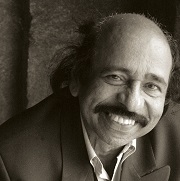
K. Sachidanandan is an Indian poet and critic writing in Malayalam and English. A pioneer of modern poetry in Malayalam, a bilingual literary critic, playwright, editor, columnist and translator, he is the former Editor of Indian Literature journal and the former Secretary of Sahitya Akademi. He is also a public intellectual of repute upholding secular anti-caste views, supporting causes like environment, human rights and free software and a well-known speaker on issues concerning contemporary Indian literature.