Translation and the idea of Indian Literature: Part 1
Whenever I think of Indian literature, a story retold by A. K. Ramanujan comes to mind: Hanuman reaches the netherworld in search of Rama’s ring that had disappeared through a hole. The King of Spirits in the netherworld tells Hanuman that there have been so many Ramas over the ages; whenever one incarnation nears its end, Rama’s ring falls down. The King shows Hanuman a whole platter with thousands of rings, all of them Rama’s, and asks him to pick out his Rama’s ring. He tells this devotee from earth that his Rama too has entered the river Sarayu by now, after crowning his sons, Lava and Kusha. Many Ramas also mean many Ramayanas and we have hundreds of them in oral, written, painted, carved and performed versions. If this is true of a single seminal Indian work, one needs only to imagine the diversity of the whole of Indian literature recited, narrated and written in scores of languages. No wonder, one of the fundamental questions in any discussion of Indian literature has been whether to speak of Indian literature in singular or plural.
With 184 mother tongues (as per Census, 1991; it was 179 in George Grierson’s Linguistic Survey of India, along with 544 dialects, and 1,652 in 1961;), 22 of which are in the Eighth schedule of the Indian constitution and 25 writing systems, 14 of them major, with scores of oral literary traditions and several traditions of written literature, most of them at least a millennium old, the diversity of India’s literary landscape can match only the complexity of its linguistic map. Probably it was this challenging complexity that had forced an astute critic like Nihar Ranjan Ray to conclude that there cannot be a single Indian literature as there is no single language that can be termed ‘Indian’. To quote him as translated from Bengali by Sujit Mukherjee (Towards a Literary History of India) “Literature is absolutely language-based, and language being a cultural phenomenon, it is all but wholly conditioned by its locale and the socio-historical forces that are in operation through the ages in that particular locale. If that be so, one may reasonably argue that the literature of a given language will have its own specific character of form and style, images and symbols, nuances and associations.”
It is true that often ‘Indian’ tends to imply the values which argue for the cultural unity of India as a whole. The use of English to write about literature in Indian languages seems to reinforce such a view. As E. V. Ramakrishnan observes in his introduction to Making It New: Modernism in Malayalam, Marathi and Hindi Poetry (IIAS, Shimla) the framework of grand narratives of history cannot accommodate the subversive function of the new trends in literature unless they become domesticated and canonized.
The levelling effect of history and the domestication implicit in canonicity finally fossilize authors and works, leaving no trace of their relevance to our present. We also have to recognize the fact that the gap between the national and he regional has been problematised by the post-colonial vocabularies of identity and difference, and centrality and plurality.
Comparative literature scholars like K. M. George and Sisir Kumar Das have attempted composite histories of Indian literature as in the former’s Comparative Indian Literature and the latter’s A History of Indian Literature. Sisir Kumar Das tries to locate the points of convergence and parallels on a civilizational terrain of labyrinthine complexity. He looks at the history of Indian literature as a history of “the total literary activity of the Indian people, an account of all literary traditions, great and little, their ramifications and changes, their recessions and revivals, dominance and decline.” In fact a literary text produced in an Indian language answers a certain need, or performs a historical function in the context of specific linguistic community and its meaning lies essentially in its specificity. This relationship of the text to its context gets blurred or distorted when we abstract a text in an Indian language into the realm of a national literary history. In order to understand how a poet or a fiction writer radicalizes the literary idiom, it is necessary to grasp the specific history of that literature along with its social background from which the literary registers spring. There is in addition the question of the overlapping of various tendencies at the same juncture in most Indian languages. In Malayalam for example, even now there are romantic poets following an older idiom jostling with those who consider themselves post-modern and experiment with avant- garde idioms. This gets further complicated if we introduce the element of ideology that according to Michael Bakhtin is inscribed in the language. In short there are problems of chronology (or synchrony and diachrony), of ideology and of terminology.
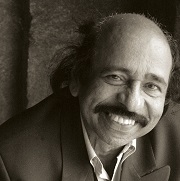
K. Sachidanandan is an Indian poet and critic writing in Malayalam and English. A pioneer of modern poetry in Malayalam, a bilingual literary critic, playwright, editor, columnist and translator, he is the former Editor of Indian Literature journal and the former Secretary of Sahitya Akademi. He is also a public intellectual of repute upholding secular anti-caste views, supporting causes like environment, human rights and free software and a well-known speaker on issues concerning contemporary Indian literature.