Translation and the idea of Indian Literature: Part 2
However crossings of linguistic boundaries are so frequent in Indian literature that we find it difficult to divide our literature solely on the basis of language. In the words of the distinguished Marxist theoretician Aijaz Ahmed, ‘multilingualism and polyglot fluidity’ are in the very nature of Indian creativity. We have Indian writers of the past like Kabir or Namdev who wrote in Punjabi and varieties of Hindi, Meerabai who is claimed as much by Gujarati as by Braj and Rajasthani, Guru Nanak who easily switched over from Persian to Kaifi and to Lahudi, Vidyapati who belonged equally to Sanskrit and Maithili and Avahatta. In the modern times we have many writers who belong to the composite Hindi-Urdu tradition that can perhaps be called the Hindusthani tradition like Premchand, we have bilingual writers who write in Urdu and their mother tongues like the Gujaratis, Mohammed Alvi or Jayant Parmar, not to speak of several bilinguals who write in English as well as their mother tongues: A.K. Ramanujan(Kannada), Jayanta Mahapatra(Oriya), R. Parthasarathy(Tamil), Arun Kolatkar, Dilip Chitre, Kiran Nagarkar (Marathi) and Kamala Das ( Malayalam)being some well-known examples.
Most Indian languages also share genres and forms from the mahakavya, doha, prabandha, prahasana, nataka, and ballad to sonnet, elegy, lyric, narrative poem, short story and the novel. Fourthly they also share concepts of poetics, both oriental and occidental, from rasa, dhvani, alankara, anumana, vakrokti, bhava and vibhava to mimesis, catharsis, metaphor, metonymy, suggestion, myth, archetype and several other, more contemporary, terms, concepts and methods including structuralism, psychoanalysis, reception aesthetics, symptomatic reading and deconstruction. Fifthly many literatures in India share literary influences as well as trends and movements like the bhakti, the nationalist or swarajist, the Progressive or Pragativadi , the Modernist or adhunik Movements and the later trends like post-Modernist or uttar-adhunik, nativist or deseevadi, ecological or prakritivadi or paristhithivadi, feminist or nareevadi, dalit and tribal or adivasi movements. This is besides shared patterns of thought, feeling, concerns and their modes expression.
These common features must have inspired the famous statement by S. Radhakrishnan popularized by the Sahitya Akademi: “Indian Literature is one even while written in different languages.” One problem with this approach is that it is reductive and tends to standardize all the literatures of India and in the process leaves out and thus alienates many literatures like the oral tribal literatures, literatures of the North East and of certain languages and dialects where the history has proceeded in other directions and which have had little impact of the West. This dilemma was best summed up by U. R. Ananthamurthy once when he said, “if you look at the diversity of Indian literature, you come to see its unity and if you look for unity, you are struck by its diversity.” This is in fact a dialectical statement that is nearer the truth than the positions expressed by either Nihar Ranjan Ray or S. Radhakrishnan for, while there have been pan-Indian trends and movements, there have also been regional ones, and even the pan-Indian movements like Bhakti have manifested themselves in different forms in different Indian languages. It is also not true to say that all the movements have affected all the literatures alike or that the influences from outside the languages, Indian or otherwise, have had the same impact across languages. There are also forms that are unique to certain languages like for example, the thullal poem, kathakali verse, the cartoon poem or the pattalakkatha (barrack stories) to Malayalam, or bijak or ramaini peculiar to ancient Braj as used by Kabir or the pillaipadal (lullabies) , chintu (a kind of song), akaval (a metric mode in narratives), venpa(for didactic works), kalippa,(for love poetry and choral music), vanchappa,(for descriptive situations), kummi,( a song for dancing women), and kanni,( a couplet form) in Tamil, abhang in Marathi , vachana in Kannada , vakh in Kashmiri (all forms of Bhakti poetry) or rubai, maznavi, qavvali, manaqib, nama, qasida or quit’a in Urdu..This is also true of the concepts of poetics. All the languages were not equally permeated by Sanskrit poetics. Tamil, for example, had its own concepts like that of the tinai or terrains with their peculiar moods and contexts, their uri and mutal like kurinchi (mutal: mountain, uri: punartal or pre-marital union),marutam (mutal: lowland, uri: oodal, or marital union sulking over infidelity), neytal (mutal: seashore, uri: iranagal or anxious pining in the state of separation), mullai (mutal: forest or pasture, uri: iruttal or patient waiting), and palai ( mutal: desert, uri: pirital or separation).Tholhappiyam also speaks of meypadus comparable to the rasas ( uvakai: sringara, nakai: hasya, azhukai: karuna, vekuli: raudra, perumitam: veera, accam : bhayanaka, ilivaral: bhibhatsa and marutkai: atbhuta. There are also concepts like ullurai connotatively close to dhvani. Urdu has inherited a lot of concepts from the Perso-Arabic critical tradition. One can also see that different languages have appropriated Sanskrit as well as Western concepts in poetics with nuanced semantic shifts. Some forms are common to some languages , but not to all alike; the ghazal that came from Persian , was developed in Urdu and then had practitioners in Hindi , Marathi, Gujarati and even in English in India (remember Agha Shahid Ali, for example) is one example. This is also true of neo-classical forms like champu and sandeshakavya, or movements like Dalit literature shared chiefly by, say, Marathi, Gujarati, Hindi, Punjabi, Kannada, Tamil, Telugu and more recently, Malayalam. Even a pan-Indian tendency like the Progressive Literary Movement was stronger in languages like Urdu, Hindi, Oriya, Bengali, Telugu and Malayalam than in others. There are too movements and debates confined to one or two languages like desseevad or nativism chiefly observed in Marathi and Gujarati. In short while languages have interacted from time to time and received forms, trends and movements from other regions and languages, each language has had also periods of isolated growth and its own special genius just as each region in India has its own customs, celebrations, forms of art and literature and at times even certain temperamental tendencies. Indian culture is a mosaic of cultures, religions, races, languages, attitudes and world views; hence the concept of Indian literature also has to be open, inclusive, dynamic and flexible so that it accommodates diverse voices, of the majority as well as the religious, linguistic, ethnic and sexual minorities.
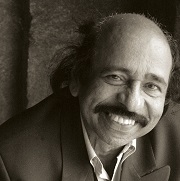
K. Sachidanandan is an Indian poet and critic writing in Malayalam and English. A pioneer of modern poetry in Malayalam, a bilingual literary critic, playwright, editor, columnist and translator, he is the former Editor of Indian Literature journal and the former Secretary of Sahitya Akademi. He is also a public intellectual of repute upholding secular anti-caste views, supporting causes like environment, human rights and free software and a well-known speaker on issues concerning contemporary Indian literature.