Translation and the idea of Indian Literature: Part 3
It is in this background that the role of translation in the constitution of the idea of Indian literature gets foregrounded. It is well known that India has a translating consciousness and we keep translating every moment of our active life. It is difficult to come across monolinguals in our country: at least it was, until the English medium education began to gradually weaken and destroy our command over the mother -tongues. We also mix languages almost unconsciously in our everyday speech. Indian literature is founded on direct or free translations since the various Ramayanas, Mahabharatas and Bhagavatas in different languages including the tribal and folk versions and the performative improvisations have been the very foundations of our rich literatures. Even the distinction between the original work and the translation was rather blurred and uncertain in India’s precolonial literary discourse. The Ramayanas of Pampa, Kamban, Ezhuthacchan, Molla, Premananda, Eknatha, Balaramadas, Kritibas, Tulsidas or Madhav Kandali, for example, were taken to be neither translations nor even adaptations, but original works as they were the most brilliant manifestations of the genius of their respective languages. The story of Indian literatures until, say, the nineteenth century, was mostly a story of creative translations, adaptations, retellings, interpretations, epitomes and elaborations of classical texts. Translations from Sanskrit, Persian, Arabic and modern Indian languages knit together communities, languages, regions and cultures.Along with Ramayana, Mahabharata and Bhagavata,collections of folktales, fables and legends, like Panchatantra, Vikramaditya tales, Kathasaritsagara, Brihatkatha and Jataka Tales travelled from language to language instilling in theirv readers a sense of a common narrative heritage. Later when modern novel and short story came to India, these epics, magical fables and folktales often served as indigenous models for story telling. I recall Thakazhi Shivasankarapillai, the great Malayalam realist fiction writer, claiming that his epic novel Kayar was modelled on Mahabharata. Magical realism, fantasy and allegory have been very natural to Indian narrative imagination and we practised them much before we began to hear of the Latin American novelists like Gabriel Garcia Marqez or Mario Vargas Llosa or the fantasies of the Italian writer Italo Calvino or the allegories of the Czech-German writer Franz Kafka. The translations of Arabian Nights into Indian languages reinforced this oriental tradition of fantasy and magic. It was realism that was more Western than these tendencies. The works of Kalidasa, Bhasa , Bhavabhuti, Visakhadatta, Banabhatta , Soodraka, Jayadeva and others not only got translated into most Indian languages but gave a norm to the critical evaluation of poetry in the beginning. This was also true of the translations and adaptations of Shakespeare’s works in the nineteenth and twentieth centuries. Our sense of modern drama can be traced to these translations along with those of playwrights like Ibsen, Strindberg, Bernard Shaw, Chekhov and others.
Indian novel as we know it today also has been deeply impacted by translations. Some of our early novels actually began as translations. O. Chandumenon, who wrote Indulekha in Malayalam in 1889 has confessed that he had begun it as a translation of Disraeli’s English novel, Henrietta Temple. Later he decided to rewrite the novel though it finally turned out to be an independent work of fiction. He has delineated the motifs behind his work in a dedicatory letter to his translator, W. Dumergue: “ First my wife’s oft-expressed desire to read in her own language a novel written after the English fashion, and secondly a desire on my part to try whether I should be able to create a taste amongst my Malayalee readers not conversant with English, for that class of literature represented in the English language by novels, of which at present they… have no idea, and… to illustrate to my Malayalee brethren the position, power and influence that our Nair women who are noted for their natural intelligence and beauty, would attain in society, if they were given a good English education and finally to contribute my mite towards the improvement of Malayalam literature, which I regret to observe, is fast dying out by disuse as well as by abuse.” Nand Shankar Mehta also has similar things to say about his Gujarati novel, Karan Ghelo (1866): “The former education inspector of our state Mr. Russell has expressed to me his desire to see Gujarati books written along the lines of English novels and romances. I have written this novel accoding to that plan.”Samuel Pillai says about his Tamil novel,Piratapa Mutaliyar Charittiram that his object was ‘to supply the want of prose books in Tamil’ and that he has ‘represented the principal personages as perfectly virtuous, in accordance with the opinion of the great English moralist, Dr . Johnson’. Later the translations of foreign novels by Dickens, R.L. Stevenson, Goldsmith, Meredith, George Eliot, Emile Bronte, Joseph Conrad, Melville,Tolstoy, Dostoevsky, Turgenev,Sholokhov, Thomas Mann and others and Indian novels by Bankim Chandra Chatterjee, Saratchandra Chatterjee, Bibhuti Bhushan Bandopadhyay, Rabindranath Tagore,Tarashankar Banerjee, Manik Banerjee, Bimal Mitra, Ashapoornadevi, Shankar, Mahaswetadevi, Kishan Chander, Rajendrasingh Bedi, Amrita Preetam, Premchand, K. A. Abbas, Jainendrakumar and others provided firm models for realist fiction in India. We also got many new forms and models of writing through translations from English or Persian like the modern lyric, sonnet, ghazal, barahmasa, elegy, satire, haiku, sequence poem, surrealist poetry, symbolic poetry, allegory, epistolatory fiction, absurd play etc.
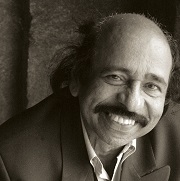
K. Sachidanandan is an Indian poet and critic writing in Malayalam and English. A pioneer of modern poetry in Malayalam, a bilingual literary critic, playwright, editor, columnist and translator, he is the former Editor of Indian Literature journal and the former Secretary of Sahitya Akademi. He is also a public intellectual of repute upholding secular anti-caste views, supporting causes like environment, human rights and free software and a well-known speaker on issues concerning contemporary Indian literature.