Translation and the idea of Indian Literature: Part 4
The translation of the Holy Bible was another important landmark in the development of prose in Indian languages. In most languages Bible got translated in the nineteenth century by missionaries- who also gave many of our languages their first dictionaries and systematic books of grammar- and the prose of these translations served as a model for native writers. The first printing presses also came to be established mostly by the missionaries for printing missionary literature, but we know how the printing press contributed to the creation of a public sphere in India and how mechanical reproduction helped popularize literature and art.
Translation has also helped the formation of movements cutting across languages. First it would be the translation of works from abroad. We are aware how Tolstoy’s translations were a major influence on Mahatma Gandhi’s ethical thinking; early leaders of the freedom struggle and of independent India like Jawaharlal Nehru and Baba Ambedkar. Translations of the works of these were also impacted by egalitarian Western thoughts and ideas received through original works as well as translations. Later translations of the works of these and other leaders played a major role in bringing Indian people together on the common platform of Indian freedom struggle. This was also aperiod of translations of literature. The works of Tagore, Tarashankar, Saratchandra, Subramanya Bharati, Sumitranandan Pant, Vallathol, Keshav Sut, Ghulam Mehjoor, Abdul Rehman Rahi, Premchand, Basheer and a host of other patriotic writers got translated in many Indian languages and helped consolidate the patriotic and anti-colonial feelings among our people and garner support for social reform.

Photo Credit: Bhaswati Thakurta
Similarly the translations of Emile Zola, Maupassant, Tolstoy, Gorky and anti-fascist writers etc inspired the formation of the Progressive Movement in Indian literature. Later Indian progressive literature began to be mutually translated among our languages and thus to influence one another. Premchand got translated into almost all major Indian languages; this was also the case of writers like Thakazhi, Basheer, Jayakantan, Akhilan, savitri Roy, K. A. Abbas , Mulkraj Anand, Gurdial Singh and such other realist writers who empathized with the subaltern classes. Their translations fom the original into other Indian languages and into English helped reinforce the idea of a pan-Indian Progressive Literature.
Later when Modernist trends began to appear in Indian languages, they were also spurred on first by translations from abroad like the poetry of Baudelaire, Mallarme, Rilke,T. S. Eliot, W. H. Auden, Octavio Paz etc and fiction writers and playwrights like James Joyce, Samuel Beckett, Albert Camus, Jean Paul Sartre, Franz Kafka, Italo Calvino, Louis Pirandello,Eugene O’neill, Edward Albee, Wole Soyinka and othrs. Later the Indian modernists began to get translated from their languages into other Indian languages and at times into English. Most of these writers were bi-lingual or multilingual; so many translations were done by themselves; even if not they were capable of judging the translations at least in English. Thus the translations of Ajney, Muktibodh, Jeebanananda das, Bishnu Dey, B. S. Maedhekar, Sitanshu Yashaschandra, Suresh Joshi, Ayyappa Paniker, Ka. Naa. Subramaniam, Sri Sri, Gopala Krishna Adiga, U. R. Ananthamurthy, Nirmal Verma, Krishna Baldev Vaid,Arun Kolatkar, Dilip Chitre, Ismat Chughtai, Qurratul-ain-Hyder and such other pioneers began to get translated into English and other Indian languages creating a sense of an Indian community of modern writers.
In the seventies of the last century, Latin American and African writers like Neruda, Vallejo, Nicanor Parra, Nicolas Guillen, Leopold Senghor,David Diop, Dennis Brutus, Margaret Walker, Leroi Jones,Langston Hughes and others alongwith the European and Asian socialist writers like Yannis Ritsos, Betrtolt Brecht, Martin Enzenzberger, Gunter Gras, Paul Eluard, Louis Aragon, Mayakovsky, Evtushenko, Faiz Ahmed Faiz, W.S. Rendre, Lu Hsun, Kwo-Mojo,Ai Ching and others began to be translated widely in some of the Indian languages with a decisive impact on poetry, creating a radical modern poetry that stood up against the vagaries of capitalist and casteist exploitation. The poetry of dalit Panthers and Maoists was particularly influenced by these writers.Gradually the Indian radicals also began translation one another’s poetry so that poets like Ali Sardar Jafri, Dhoomil, Pash, Amarjeet Chandan, Samara Sen, Saroj Datha, Varavara Rao, Cherabanda Raju and several others began to appear in languages like Malayalam where thre was a strong people’s cultutal movement allied to Maoist revolutionaries.
This is equally true of later movements in Indian literature like the Dalit and Feminist literatures. Translations, especially in English and Hindi , of the works of Namdeo Dhasal, Laxman Mane, Lakshman Gaikwad, Joseph Macwan, Shran Kumar Limbale, Om Praksh Valmiki, Balraj Madhopuri and others and the various anthologies of Dalit poetry, autobiography and fiction like Poisoned Bread have in fact created a special niche for dalit writing in India and turned it into a national movement. This is also happening in women’s writing. Several anthologies of women’s writing like Women’s Writing In India : From 6th Century B.C. to the Present, Inner Courtyards,Inner Spaces, In Their Own Voice etc carrying translations of women’s writing and specific works by Rashsundari Debi, Binodini Dasi, Laxmibai Tilak, Ashapurnadebi, Swarnakumari Debi, Sara Joseph, Qurratul-ain-Hyder, Ismat Chughtai, Ajeet Cour, Mridula Garg, Nabaneeta Dev Sen, Kamala Das,Amrita Preetam, Alka Saraogi, Gitanjalisree, C.K.Janu, Nalini Jameela, Sister Jesmi- many of them autobiographies-translated into English and some other Indian languages have not only enriched the corpus of women’s writing in India, but created a cross-cultural and cross-linguistic understanding of women’s issues and helped reinforce the sisterhood of women writers across the country. Even native-looking movements like Deseevad (Nativism) cannot deny the oblique impact of African or Irish literatures that had a strong regional cultural bias.
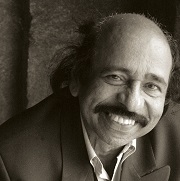
K. Sachidanandan is an Indian poet and critic writing in Malayalam and English. A pioneer of modern poetry in Malayalam, a bilingual literary critic, playwright, editor, columnist and translator, he is the former Editor of Indian Literature journal and the former Secretary of Sahitya Akademi. He is also a public intellectual of repute upholding secular anti-caste views, supporting causes like environment, human rights and free software and a well-known speaker on issues concerning contemporary Indian literature.