Translation and the idea of Indian Literature: Part 5
Translation has also played a major role in promoting common trends and the employment of common norms and methods in Indian literary criticism. The translations of the fundamental texts of Indian poetics by Bharata, Anandavardhana, Kuntaka, Bhamaha, Mahimabhatta and others from Sanskrit formed the earliest guidelines for the evaluation of poetry in most Indian languages. Later some Western critical texts right from Aristotle and Longinus to Sir Philip Sydney, Matthew Arnold, I.A. Richards and T. S. Eliot came to be translated, giving rise to treatises of comparative poetics as well as applications of Western theories of Mimesis, Catharsis, Semantics and Semiotics to Indian texts of poetry and drama. At least some languages also have translations of structuralist and post-structuralist texts or adaptations and interpretations of these texts (Paul de Man, Roland Barthes, Derrida, Foucault etc). Dalit poetics has been impacted greatly by Black aesthetics and Indian feminist criticism too is most often derived from Western, especially French, models. Even where full texts have not been translated, we find partial translations and quotations that illuminate contexts.
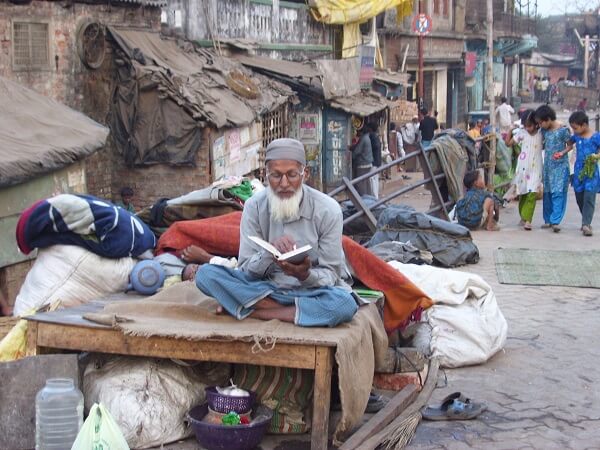
Photo Credit: Bhaswati Thakurta
If today there is a new eagerness among writers and readers in India to know what is happening in languages other than their own, translations are chiefly responsible for that. Translations have begun to appear recently even from the tribal languages that had so far been completely neglected thanks to the initiative taken by Sahitya Akademi and the interest of scholars like Ganesh Devy. We certainly need more translations of folk and tribal lore wherein lie the solid foundations of our literatures. Translations have begun to bind our writers together and helped form an Indian community of readers as well as writers,that include even Indians living outside India eager to know the literature of their motherland. Translations have also helped the sharing of concerns among Indian writers across languages, like concerns for human rights, ecological balance, gender equality, the impact of globalization, religious and racial violence, the terrorism of the militants as well as the state etc. One cannot forget here that modern technologies of communication which have no doubt done a lot of harm have also helped meaningful social networking among readers and writers through virtual communities, blogs and social networks. Perhaps mutual translations among Indian languages are on the wane today chiefly due to a lack of competent bilingual scholars with the necessary skills and sensibility, except between some language pairs. But this has been compensated to some extent by the increase in the translations into English thanks to the pioneering efforts of the Sahitya Akademi and National Book Trust along with the new interest shown by private publishers like Oxford University Press, Penguin, Katha, Orient Longman, Macmillan, East-West, Harper-Collins, Rupa and many committed little publishing houses.
Let me conclude with a few observations on the Indian idea of translation. The West has a tendency to look at multi-lingualism as a problem to be tackled while for us it has been a vital source of creative abundance.The West often looks at translation a an exile as reflected in Hillis Miller’s statement that translation is ‘the wandering existence in a perpetual exile’. The myth of the Tower of Babel further underlines the idea of multilingualism as a curse. But India has lived with her plurilingual heritage for centuries and we have seldom been haunted by the fear of being unparadised; translation is a daily act with us, essential and intimate. We have also learnt to admire deviations in translations as we have along tradition of adaptations , especially of the epics, where the events and characters are localized, episodes omitted, transformed or newly added, metaphors and similes refreshed, and even the whole text reconceived. Authenticity to the Western scholars often meant literality, a concept close to Platonic mimesis, an attempt to resituate the original through close imitation. India has no martyrs to the cause of translation like Etienne Dolet, the sixteenth century French translator of Plato, sentenced to death for the freedoms he took with the original text. If we had followed this example, we would have ended up executing most of our epic and bhakti poets who took every kind of freedom with their’original/ texts in Sanskrit. Perhaps the idea of the ‘original’ text is not so strong with us because of our strong oral tradition that had only changing texts, where accretions, substitutions and attritions were a common rule. While colonial Europe found in the translation of exotic ‘Oriental’ texts a way to contain and dominate their creators, India sought through translation a living dialogue between its own cultural past and present as also between its cultures and the cultures of other lands. Translation was looked upon as a revitalization of the original through the imagination of a writer of another space and time. The original was not specially privileged as the self was in a flux as proposed by the Buddha in his Vajrakhedika (Diamond Sutra). Perhaps we need to restore the pre-colonial openness to texts today so that we overcome the asymmetrical relations of power that operated in the colonial era turning translation into a strategy of containment and reinforcement of the hegemonic versions of the colonized as objects without history. Translation to us today is a way of retrieving our people’s histories and recording their past and present.
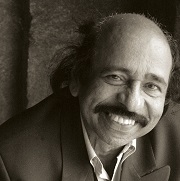
K. Sachidanandan is an Indian poet and critic writing in Malayalam and English. A pioneer of modern poetry in Malayalam, a bilingual literary critic, playwright, editor, columnist and translator, he is the former Editor of Indian Literature journal and the former Secretary of Sahitya Akademi. He is also a public intellectual of repute upholding secular anti-caste views, supporting causes like environment, human rights and free software and a well-known speaker on issues concerning contemporary Indian literature.